

For many people considering dreadlocks, one of the biggest fears is traction alopecia.
You may have heard stories of people losing hair around the hairline, developing bald patches, or seeing their roots become thinner over time. This can understandably make people nervous about committing to dreadlocks, especially if their hair is already fine or fragile.
So the question many people search for is:
Do dreadlocks actually cause traction alopecia?
The answer is more nuanced than a simple yes or no.
Why Some Dreadlocks Cause Traction Alopecia.
According to the British Association of Dermatologists, traction alopecia is caused by prolonged tension placed on the hair follicles over time.
Traction alopecia is a form of hair loss caused by constant tension on the hair follicle.
Over time, repeated pulling on the hair can inflame and weaken the follicle. If the tension continues for long enough, the follicle may eventually stop producing hair.
This is why traction alopecia is often associated with:
- Tight braids
- Extensions that are too heavy
- Constant pulling on the hairline
- Repeated tight styling over many years
The key issue is not the hairstyle itself, but the tension placed on the roots.
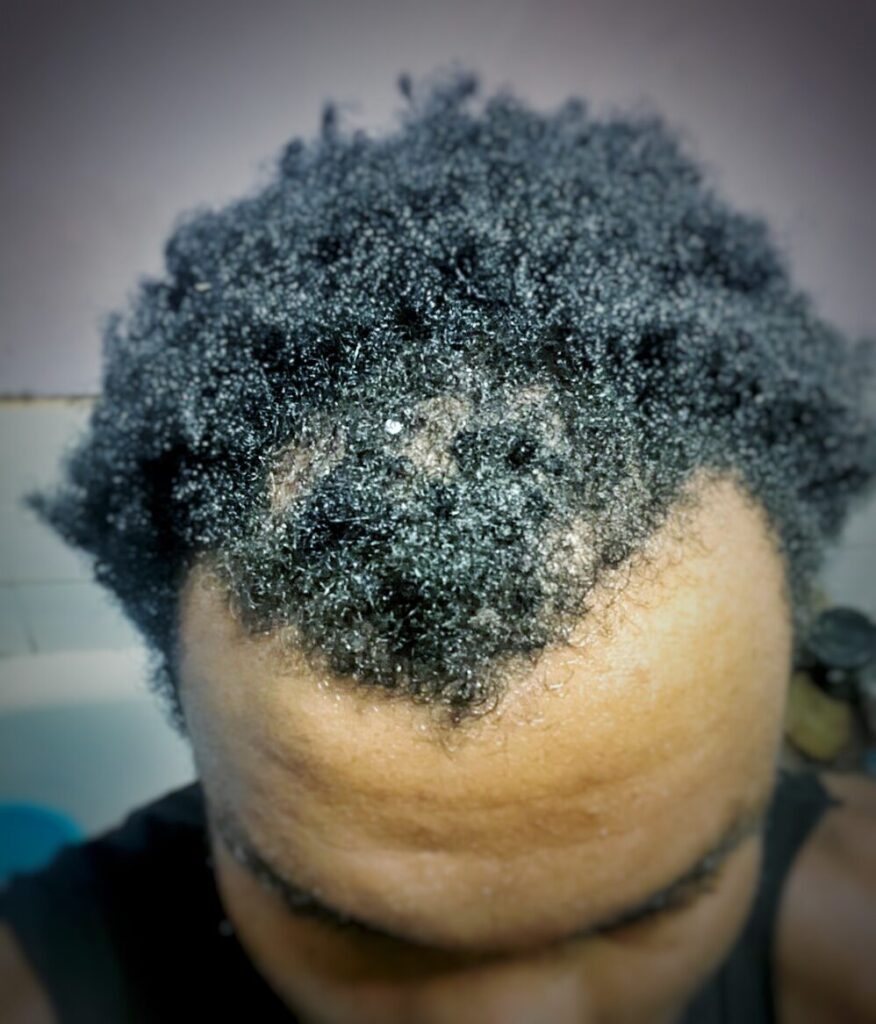
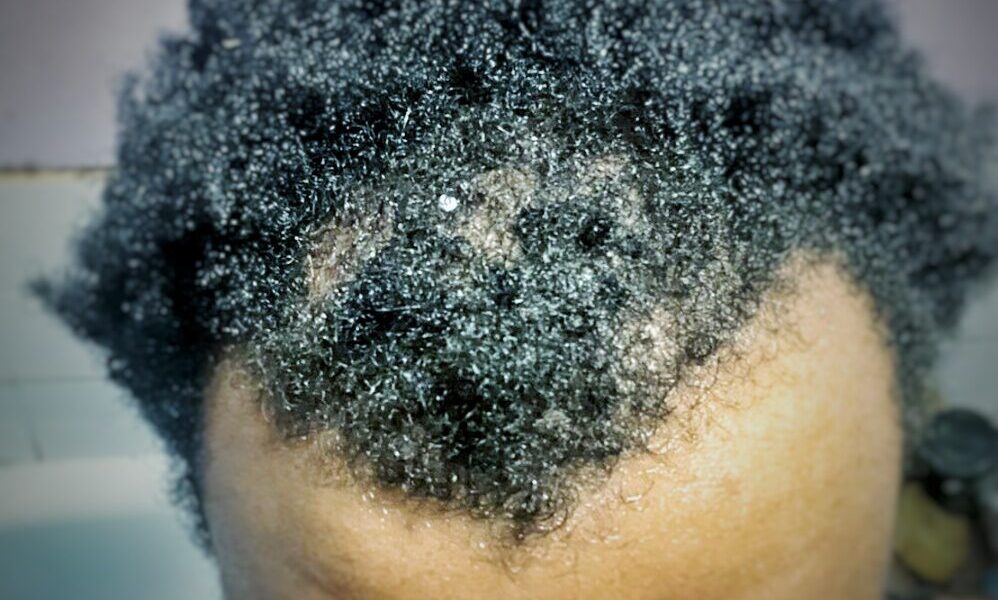
Starting point showing visible thinning and alopecia, allowing careful assessment of scalp health before planning a safe dreadlock restoration.
Why Some Dreadlocks Lead to Hair Damage
Many people who develop thinning roots or bald patches with dreadlocks have experienced one or more of the following problems:
1. Excessively Tight Installation
Some methods rely on aggressive twisting or interlocking that places immediate stress on the roots.
2. Extensions That Are Too Heavy
When extensions are much heavier than the natural hair can support, the follicles can slowly weaken over time.
3. Harsh Maintenance Techniques
Frequent tight retwisting or interlocking can repeatedly stress already delicate follicles.
4. Fragile Hair That Was Never Assessed
Fine or thinning hair needs a completely different approach than thick hair.
Without proper assessment, damage can happen slowly over time.
The Good News: Dreadlocks Don’t Automatically Cause Hair Loss
When installed and maintained properly, dreadlocks do not have to cause traction alopecia.
The most important factors are:
- Correct tension distribution
- Lightweight extension choices
- Gentle installation techniques
- Careful assessment of hair density and scalp health
For people with fine hair, thinning areas, or sensitive hairlines, a specialist approach makes all the difference.
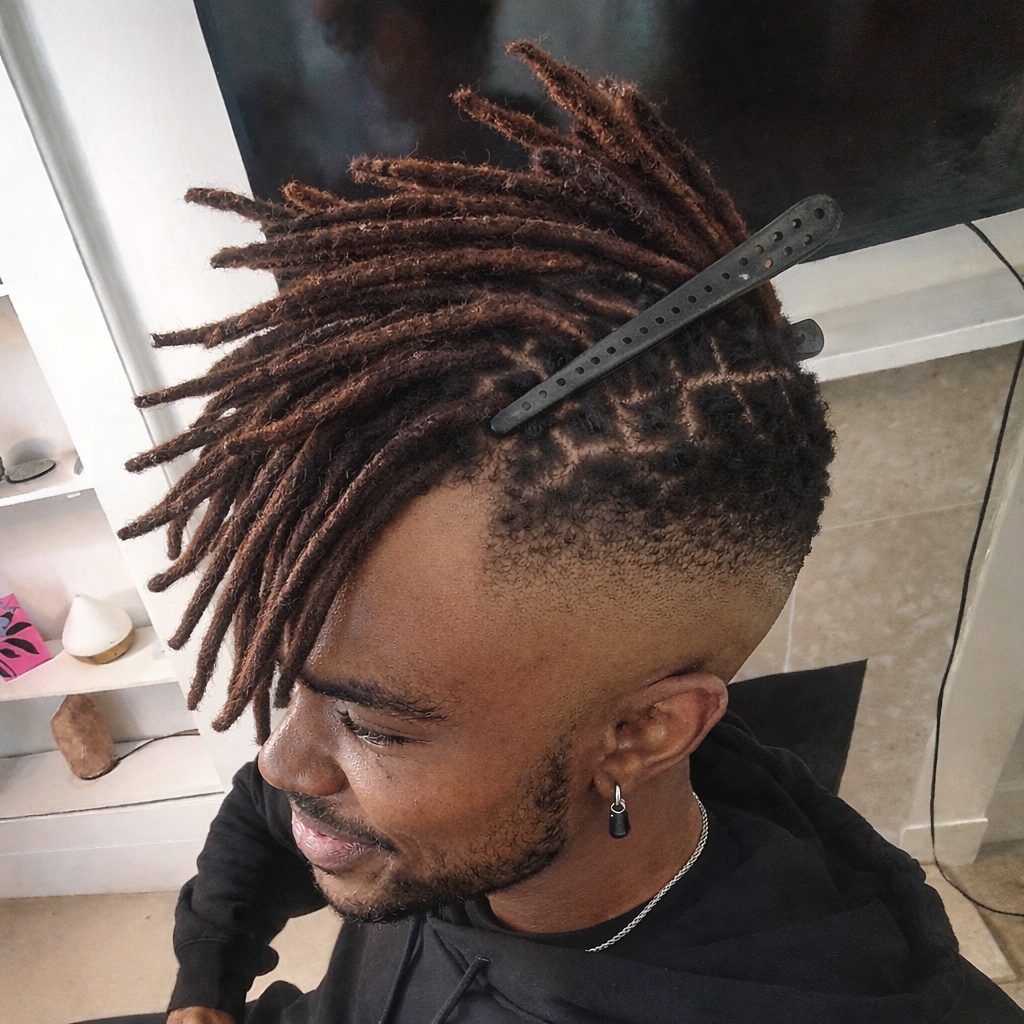
Precision sectioning designed to support long-term dreadlock stability and healthy root growth.
Can You Still Have Dreadlocks If Your Hair Is Already Thin?
In many cases, yes.
People with thinning hair or fragile roots can often still enjoy dreadlocks when the installation is carefully designed around their hair’s natural limitations.
This may involve:
- Custom extension weight
- Strategic sectioning to protect weaker areas
- Gentle methods that avoid aggressive twisting
- Ongoing maintenance designed for fragile hair
The goal is always the same:
protect the follicles while creating a style that still feels beautiful and empowering.
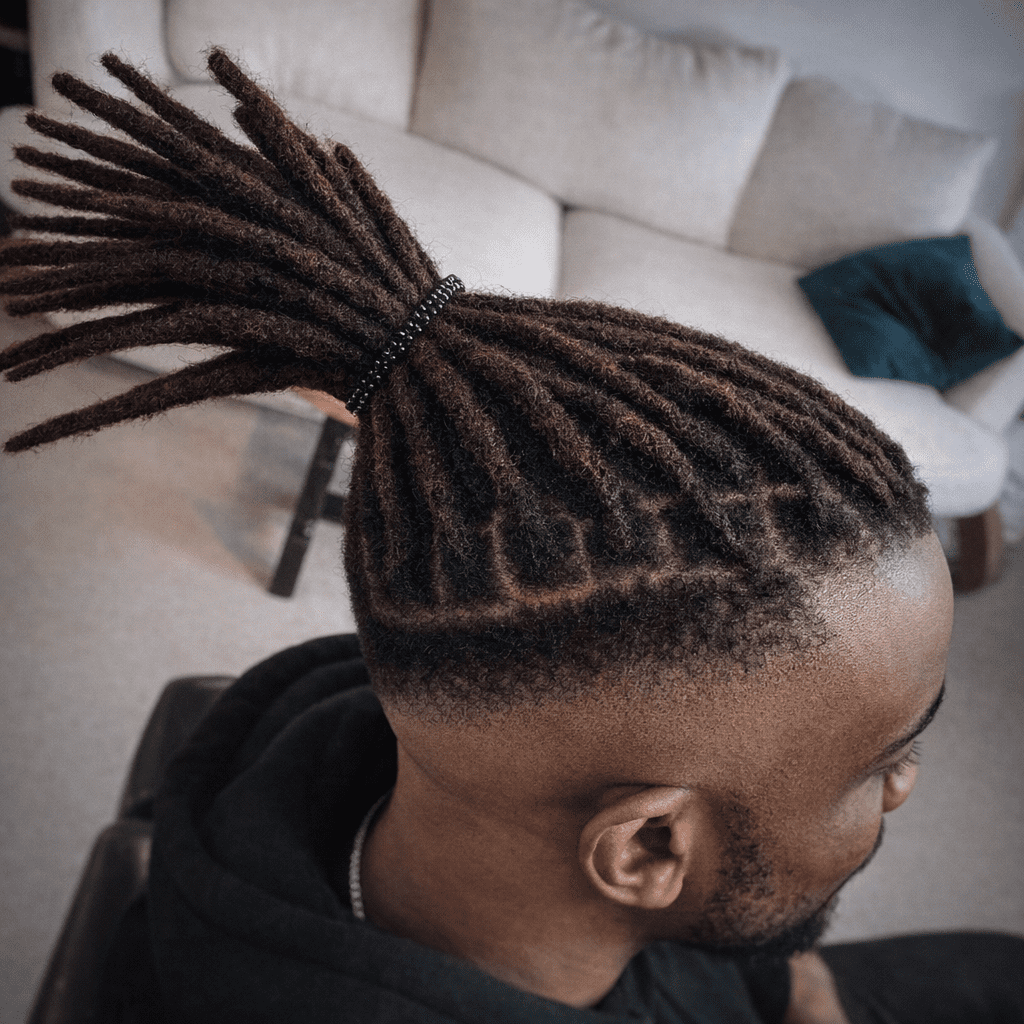
Full set of dreadlock extensions installed with precision sectioning to create balanced structure, natural density, and long-term stability.
When a Personal Assessment Is Important
If you are already experiencing:
- thinning roots
- hairline recession
- scalp sensitivity
- previous traction damage
then it’s important to look at your specific hair and scalp condition before installing dreadlocks.
Every head of hair is different, and a personalised assessment can help determine:
- whether dreadlocks are suitable for your hair
- which method would be safest
- how to protect your roots long term
A Gentle Next Step
If you’re exploring dreadlocks but are concerned about thinning hair or traction alopecia, the best place to start is with a private strategy consultation.
This allows us to look at your hair history, your scalp health, and your goals, and map out a safe pathway forward.
Or message directly on WhatsApp to begin the conversation.
Because when dreadlocks are created with care, knowledge, and respect for the hair — they can become a long-term style that protects rather than damages your roots.Whats
We BeLiEve YoU Are ALL AwEsOme & DeSeRve To StAnD Out