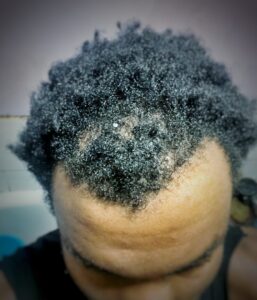
Dreadlock Maintenance

Overgrown roots, joined sections, or dreadlocks losing their shape? This is where precise maintenance matters.

YOU’RE KNOT the only one. Life happens. The real question is whether your dreadlocks simply need clean upkeep, or whether the structure now needs a deeper reset.

Maintenance is not just a tidy-up. It is the work that keeps the sectioning clear, the base controlled, and the dreadlocks growing out in a way that still makes sense months later.

This may be right for you if…

  • your roots have overgrown and started joining together
  • the base feels messy, soft, bulky, or uneven
  • your mid-lengths have become misshapen
  • you already have dreadlocks and want them maintained properly
  • you had your dreadlocks started elsewhere and want a more specialist eye on them

Start with the right consultation

If your roots are simply grown out and the structure is otherwise healthy, a straightforward consultation may be enough.

If your case involves thinning hair, breakage, previous damage, reconstruction, scalp sensitivity, or uncertainty about what is safely possible, start with the deeper consultation.

Book Your Specialist Consultation

What this really involves

As new hair grows, it does not appear neatly. It grows between sections, starts linking to the wrong dreadlocks, and changes the shape of the base.

Proper maintenance is the process of reworking that regrowth with control so each dreadlock stays separate, structurally sound, and true to its original map. Many heads benefit from maintenance around every three months, but the real timing depends on your hair behaviour, density, section size, and how quickly the roots begin to merge.

This is where the Precision Intermatting Method™ matters. The work is mapping-led, tension-aware, and designed to minimise unnecessary breakage while keeping the dreadlocks growing out cleanly over time.

Why standard maintenance can fail

  • too much root work in fragile areas
  • no attention paid to the original sectioning or scalp condition
  • joined roots left to worsen for too long
  • dense areas underestimated and delicate areas overworked
  • maintenance done for a quick tidy instead of long-term structure

Who this is usually for

This service is usually right for people who already have dreadlocks and need them brought back under control before the roots, sections, or overall shape drift too far.

It can suit clients with straightforward regrowth, people whose dreadlocks were started elsewhere, and people who want a more precise long-term maintenance path instead of reactive fixes.

KNOT can also maintain dreadlocks created elsewhere where the structure is suitable to work with.

You may need a deeper consultation if…

  • you have thinning edges, traction alopecia, or fragile hairlines
  • there is breakage, pain, scalp concern, or visible weakness at the root
  • your dreadlocks have grown out so unevenly that re-mapping may be needed
  • you are not sure whether this is still maintenance or now reconstruction

Left it too long?

Sometimes the issue is no longer simple maintenance. Joined sections, collapsed roots, heavy grown-out areas, or dreadlocks that no longer sit where they should can move into reconstruction territory.

That does not automatically mean “start again.” It means the hair needs proper assessment so the safest route can be planned.

See reconstruction work

Optional finishing work

Maintenance is also the point where the finer details can be refined. If the ends need cleaning up, shaping, or blunting, that can be built into the plan where suitable.

The goal is not just neater roots for the day. The goal is dreadlocks that still feel intentional, balanced, and well designed as they continue to grow.

Read before you book

These will help you quickly work out whether you need straightforward maintenance, deeper assessment, or reconstruction.

Get a clear expert plan

Find out whether your dreadlocks need maintenance only, deeper correction, or a more protective strategy.

Find Out What's Safely Possible

Read this if your roots already feel compromised

If your dreadlocks feel weaker, thinner, less supported, or more unstable than they used to, these are the key posts to read first.

Dreadlock repair after damage article image

Dreadlock Repair After Damage

A deeper look at when thinning roots can still be stabilised and what repair really means in practice.

Read article

Do dreadlocks cause traction alopecia article image

Do Dreadlocks Cause Traction Alopecia?

Useful if the damage is showing most around the hairline, edges, or other tension-prone areas.

Read article

Can dreadlocks cause thinning hair article image

Can Dreadlocks Cause Thinning Hair?

A strong read if you are still trying to work out what actually caused the roots to weaken over time.

Read article