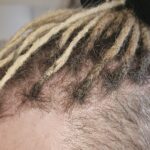
Can Existing Dreadlocks Stay in Place if You Have Traction Alopecia?
You have had your dreadlocks for years. They are part of how you recognise yourself, so noticing a thinner hairline or a dreadlock hanging from much less hair can make the thought of removal feel frightening. You want to protect your hair without losing a set you have lived with for a long time.
Existing dreadlocks do not automatically all have to come out when traction alopecia is suspected or diagnosed. But any ongoing pulling must stop, and preserving the set is only worth considering if that can be achieved. Some cases may allow unaffected dreadlocks to remain; others need partial removal, a pause or full removal.
The important question is whether the hair underneath can still support the dreadlocks you have now. A set started when your hair was thicker ten or twenty years ago may need a different plan today, even if you have followed the same maintenance routine throughout.
That is the decision this article helps you understand: whether keeping the existing set is a suitable direction at all. The details of repair or reconstruction come after that decision, rather than being assumed from the beginning.
Existing dreadlocks and traction alopecia: the first decision
- Traction alopecia does not automatically mean every dreadlock must be removed, but ongoing traction must stop.
- A familiar maintenance routine may no longer suit hair that has become thinner or more fragile.
- Partial removal or retaining unaffected areas may be considered; changing method alone does not establish suitability.
- Hair loss needs medical assessment alongside specialist planning for the existing dreadlock structure.
Your dreadlocks may be older than the hair conditions supporting them
A long-established set can carry assumptions from the day it was made. The original sections, length and styling choices may have suited a fuller head of hair, while the person wearing them has gradually noticed more scalp showing or less hair at particular roots.
In practice, I see people continue a habitual maintenance pattern because it is what they have always done. They may have their usual retwist, ask for the same style and expect the familiar result. The routine feels reliable, even when the hair being worked on has changed.
This is not about putting another practitioner’s work down. People work within their knowledge and experience, and a client’s needs can change over time. Reassessing the set means responding to the present condition of the hair, rather than treating the original plan as permanent permission to continue.
A neat root is not proof that the set should
stay
Traction alopecia is hair loss caused by repeated pulling. British Association of Dermatologists guidance explains why stopping the tension matters: prolonged traction can permanently damage follicles. A freshly maintained appearance cannot tell you whether that pulling has been removed.
Retwisting is not automatically damaging in every case. The concern is excessive or repeated tension, including maintenance and styles that pull on already vulnerable areas. A different tool or technique is not automatically suitable either; the whole arrangement still needs to be considered.
For more background on the relationship between styling and hair loss, see Dreadlocks, traction alopecia and thinning hair. Here, the next question is what that means for the set already on your head.

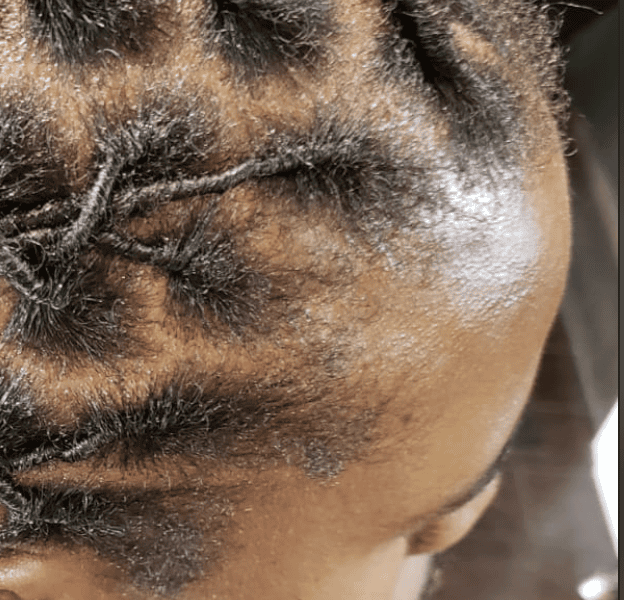
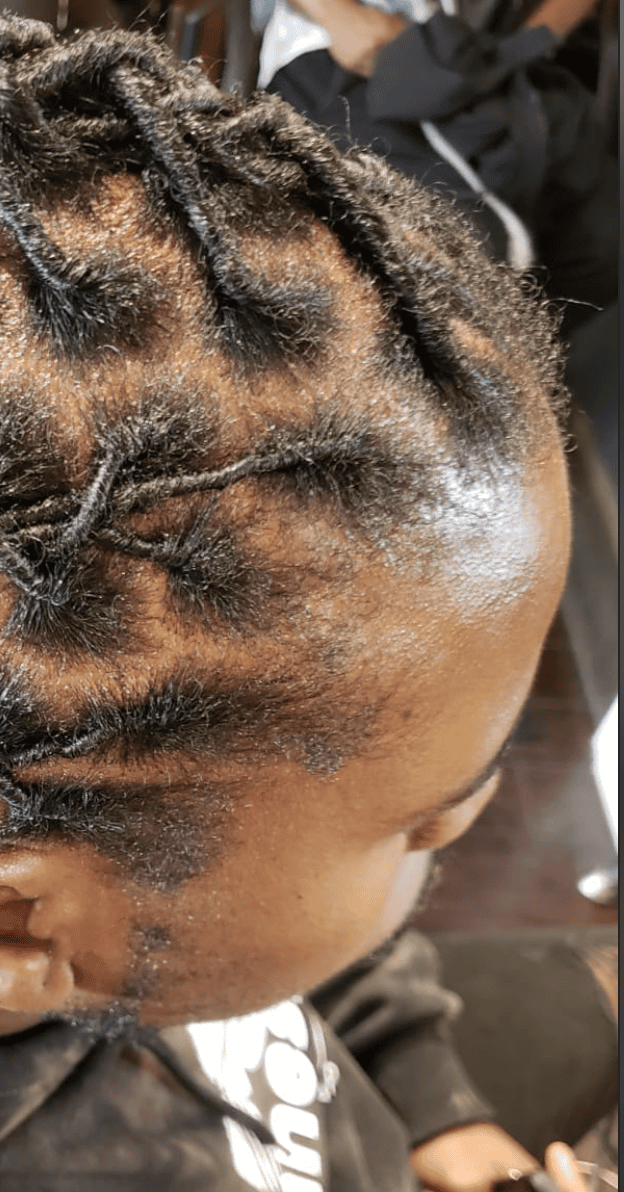
Has your hairline changed?
A change at the front deserves its own assessment, even when the rest of your dreadlocks still looks substantial.
When keeping some dreadlocks may still be considered
A problem around the temples does not, by itself, tell us that every dreadlock elsewhere needs removing. Different areas can have different levels of remaining hair and different exposure to pulling. There may be a reason to treat an affected area differently from the rest of the set.
Keeping unaffected dreadlocks may be an option where they are not contributing to traction, the remaining hair can support them and the plan is consistent with any medical advice. That is a possibility to assess, not a promise that most or all of the set can be preserved.
It also means accepting that preserving your dreadlocks may involve changing how the set looks or how you wear it. Keeping the exact count, length and styling habits cannot be the condition attached to every recommendation when the hair underneath is struggling.
Why changing maintenance is sometimes only part of the answer
I have seen people arrive with handfuls of dreadlocks that have detached after a maintenance pattern has continued to stop working for their hair. Their immediate wish is often to have those dreadlocks put back. Before discussing reattachment, I need to understand whether the remaining hair is a suitable foundation.
Detached dreadlocks are an observation from my practice, not a diagnosis of what caused someone’s hair loss. They do show why simply restoring the appearance can be the wrong first priority. Reattaching a dreadlock does not establish that the underlying problem has been resolved.
A revised maintenance approach may be part of an appropriate plan.
In other cases, the existing arrangement remains unsuitable even after a change of method. Dreadlock reconstruction is a possible service for suitable cases, not a treatment for damaged follicles or a reason to retain ongoing traction.
Before choosing corrective work
Traction history changes what needs considering before further dreadlock work is agreed.

When partial or full removal may be the more protective choice
Sometimes the affected dreadlocks cannot stay in place without continuing to pull. If that load cannot be removed while they remain, preserving them is not the appropriate goal. Partial removal may be considered when the problem is localised; a wider change or full removal may be needed when the concerns extend across the set.
Starting again does not necessarily mean immediately installing another set. There may need to be a period without dreadlocks in affected areas, medical advice or a decision that further permanent work is unsuitable. A new design cannot be promised before the present hair and scalp have been assessed.
That can be difficult to hear when you have spent years growing the set. The aim of assessment is to avoid both unnecessary removal and the reassurance of keeping something that is still causing harm. An honest limit is part of specialist care.
What waiting for one more maintenance appointment can cost
When the roots look less secure, another tidy-up can feel like the smallest decision. But if the same tension continues, the appointment may repeat the problem rather than resolve it. The visible change can be gradual enough that each visit seems separate from the next.
The cost can include further loss of supporting hair, more extensive corrective work and money spent on appointments that no longer address the situation. There is also the distress of losing dreadlocks unexpectedly after hoping ordinary maintenance would hold the set together.
You do not need to wait for dreadlocks to fall out before seeking advice. Comparing the current roots and hairline with your earlier photographs can help you describe what has changed, without trying to diagnose yourself or decide which correction you need.
When medical assessment needs to come first
If maintenance or styling causes pain, stinging, crusting or visible pulling of the scalp, stop the activity causing that traction and seek prompt medical advice.
Progressive hair loss, inflamed areas or smooth bare patches also warrant assessment by a GP or dermatologist. Do not wait for a paid dreadlock consultation to address those concerns.
The American Academy of Dermatology advises dermatological assessment because hair loss has different causes. A loctician can assess the visible structure and suitability of dreadlock work, but cannot confirm the medical diagnosis, determine follicle recovery or replace treatment advice.
The Precision Intermatting Method™ is my approach to specialist dreadlock work. It is not a medical treatment for traction alopecia, and switching to it cannot guarantee regrowth or make every existing set suitable to retain.
Understand the wider traction question
Repeated pulling can matter more than how neat the finished style looks. Understand why tension needs attention before preserving a set.
What the advanced consultation is there to clarify
This is why I don’t treat this as a standard dreadlock service. The starting point is whether the existing set remains appropriate for the hair beneath it, before deciding how much maintenance, repair or reconstruction to offer.
The £199 Advanced Case Consultation is the relevant KNOT pathway when thinning, traction alopecia or fragile areas are involved. Your photographs, hair history and current concerns help establish whether further dreadlock work may be appropriate, what limitations need explaining and whether medical advice is required before proceeding.
You do not need to know the service name in advance. Keeping some of the set, removing affected dreadlocks, pausing work or discussing a different direction are possible outcomes; the consultation does not guarantee that corrective work can be offered. Any suitable service is quoted separately.
If you live outside Brighton, the consultation can begin remotely before you arrange travel for any agreed service. Clear photographs and history are useful, but they do not replace a medical scalp examination when one is needed.
The decision is about your current hair
You can value the years
invested in your dreadlocks and still recognise that your maintenance needs have changed. A set that suited you before does not have to be continued unchanged, and a vulnerable area does not automatically decide the fate of every dreadlock.
The useful next step is to establish whether traction can be stopped and what the remaining hair can support. That gives you a clearer basis for keeping suitable areas, accepting necessary removal or pausing without spending on another appointment built around yesterday’s assumptions.
FAQ: Existing dreadlocks and traction alopecia
Not automatically, but ongoing traction must stop. Whether unaffected dreadlocks can remain depends on the extent of the problem, the support available and any medical advice. Partial or full removal may be needed if keeping them would continue the pulling.
That may be an option in some cases, but the back cannot be assumed suitable just because it looks fuller. The remaining set and the way it is worn need assessing together. Medical advice may also affect which areas should be left free from traction.
No; the risk is not established by the name of a maintenance technique alone. Excessive tension, repeated pulling and the condition of the hair matter. If the routine is associated with discomfort or worsening thinning, it needs reassessing rather than repeating out of habit.
A different approach may form part of a suitable plan, but it does not guarantee that every dreadlock can remain. The existing weight, structure and supporting hair may still be unsuitable. No maintenance method should be presented as a treatment for traction alopecia.
Reattachment needs a suitable foundation; it should not be assumed from the condition of the detached dreadlock alone. The reason for the loss and the remaining hair need attention first. Hair loss should also be medically assessed rather than diagnosed from photographs of the detached pieces.
A lack of pain does not establish suitability or rule out traction-related hair loss. Changes in the hairline, exposed areas or supporting roots still need attention. Seek medical advice for hair loss and reassess the set before continuing the same routine.
Stopping traction gives affected hair the best chance of recovery, but regrowth depends on whether follicles have been permanently damaged. Removal cannot guarantee regrowth. A dermatologist can assess the hair loss and advise on appropriate treatment.
Not necessarily; the hair or scalp may need a pause, medical care or a different long-term plan. The fact that a new set can physically be made does not establish suitability. Timing and further work need to follow assessment rather than an immediate promise to replace what was removed.
Choose the £199 Advanced Case Consultation when thinning, alopecia or fragile areas are involved. This is a separate assessment stage, and any suitable corrective service is quoted afterwards. It complements medical advice rather than providing a medical diagnosis.
Specialist dreadlock consultations · Brighton & Hove + online
Find the Right Dreadlock Consultation for Your Hair
Your hair is the starting point—not the service menu.
Whether you need straightforward maintenance, help planning new dreadlocks or extensions, corrective work, or specialist support for thinning hair and alopecia, you do not have to diagnose the right service yourself.
★★★★★ Specialist expertise supported by verified client feedback
Not Sure Which Consultation Is Right for You?
We BeLiEve YoU Are ALL AwEsOme & DeSeRve To StAnD Out
Dreadlock Extensions for a Receding Hairline: Can You Add Fullness Without Overloading the Front?
Dreadlock Extensions for a Receding Hairline: Can You Add Fullness Without Overloading the Front? You want the front of your hair to look fuller, but you are unsure where the extensions would sit. Perhaps your temples have become more exposed, or the hair around your forehead feels finer than the rest. Adding hair sounds like…

Can I Get Permanent Dreadlock Extensions With a Receding Hairline?
Can I Get Permanent Dreadlock Extensions With a Receding Hairline? You may already know you want permanent dreadlock extensions. You can picture the length, the shape and the fullness. What you cannot settle is whether the hair at the front can cope with the result you want. Permanent dreadlock extensions may be an option for…

Permanent Dreadlock Extensions Cost UK: What Are You Actually Paying For?
Permanent Dreadlock Extensions Cost UK: What Are You Actually Paying For? If you are researching permanent dreadlock extensions cost in the UK, you have probably already decided that you want them. The question now is whether the quotation in front of you is realistic - and why another provider appears to be charging considerably more…

Can Permanent Dreadlock Extensions Be Removed Without Cutting Your Hair?
Can Permanent Dreadlock Extensions Be Removed Without Cutting Your Hair? If you want permanent dreadlock extensions but feel uneasy about the word permanent, you are not alone. You may love the idea of instant length while still needing to know that you have choices if your lifestyle, health, preferences or hair condition changes. In…

Do Permanent Dreadlock Extensions Damage Fine or Thinning Hair?
Do Permanent Dreadlock Extensions Damage Fine or Thinning Hair? If you have fine or thinning hair and you want permanent dreadlock extensions, the fear is usually not whether you like the look. You already do. The real question is whether adding permanent length and fullness could cost you more of the hair you are trying…

How Long Do Permanent Human Hair Dreadlock Extensions Last?
How Long Do Permanent Human Hair Dreadlock Extensions Last? If you are asking how long dreadlock extensions last, you are probably already beyond casual inspiration. You are considering a significant investment in permanent human-hair extensions and want to know whether they can genuinely become part of your life - or whether you could be paying…

Can I Add Permanent Dreadlock Extensions to Existing Locs Without Starting Again?
Can I Add Permanent Dreadlock Extensions to Existing Locs Without Starting Again? If you are considering adding dreadlock extensions to existing locs, the reassuring answer is that you may not have to sacrifice the dreadlocks you have spent years growing. Permanent length can often be added to an existing set. The important word is existing,…
How Often Do Permanent Dreadlock Extensions Need Maintenance?
How Often Do Permanent Dreadlock Extensions Need Maintenance? If you are seriously considering permanent dreadlock extensions, it is sensible to ask what happens after installation. You may be comfortable with the initial investment but worried that you are also signing up for constant appointments, unpredictable repair bills or a lifetime of high-maintenance hair. For many…
Dreadlock Repair Cost UK: Repair, Reconstruction or Start Again?
Dreadlock Repair Cost UK: Repair, Reconstruction or Start Again? If you are researching dreadlock repair cost UK, you probably already know that something needs professional attention. Your roots may be heavily grown out, several dreadlocks may be thinning or joining together, or previous work may be coming loose. What you do not yet know is…

Human Hair vs Synthetic Dreadlock Extensions: Which Is Better for Permanent Wear?
Human Hair vs Synthetic Dreadlock Extensions: Which Is Better for Permanent Wear? If you have already decided that you want dreadlock extensions, choosing between human hair and synthetic hair can feel like the final practical decision. One option may cost considerably more. Both can look convincing online. It is reasonable to ask whether human hair…

Dreadlock Extension Consultation: What Should Be Assessed Before Installation?
Dreadlock Extension Consultation: What Should Be Assessed Before Installation? A £120 dreadlock extension consultation can feel like an unnecessary extra when you already know you want extensions. You may have photographs, a preferred length and a clear picture of how you want to look. It is reasonable to wonder why you cannot simply send the…

How Many Dreadlock Extensions Do I Need for Fine or Thinning Hair?
How Many Dreadlock Extensions Do I Need for Fine or Thinning Hair? If you are asking, “How many dreadlock extensions do I need?”, you are probably no longer deciding whether you like dreadlocks. You are trying to picture the finished result: how full it will look, whether your scalp will show, what it may cost…

Cheap Dreadlock Extensions: Why Low Prices Cost More
Cheap Dreadlock Extensions: Why Low Prices Can Cost More Later Cheap dreadlock extensions can feel like the sensible choice when you have already decided that you want permanent extensions and the specialist quotation is considerably higher. You may be looking at two prices and wondering whether the difference reflects genuine expertise or whether you are…
Traction Alopecia & Dreadlocks: What Must Be Assessed Before Saying Yes?
Traction Alopecia & Dreadlocks: What Must Be Assessed Before Saying Yes? You may already know that tight styling, repeated pulling or the weight of previous extensions has changed your hairline or created thinner areas. You may still want dreadlocks, dreadlock extensions, repair or reconstruction—but you are frightened that trying again could make the existing loss…

Dreadlock Extensions Near Me: 10 Questions to Ask Before You Book
Dreadlock Extensions Near Me: 10 Questions to Ask Before You Book Searching for ‘dreadlock extensions near me’ usually means you are no longer casually collecting inspiration. You may be comparing prices, photographs, travel distances and appointment availability because you are ready to make the change. The difficulty is that a polished social-media page can show…

Dreadlock Repair or Start Again? What a Specialist Checks First
Dreadlock Repair or Start Again? What a Specialist Checks First You may have booked what sounds like a simple root-maintenance appointment because your dreadlocks feel untidy, loose or difficult to manage. Yet once the roots, sections and existing structure are looked at properly, the work may be far more involved than ordinary maintenance. The answer…

Permanent Dreadlock Extensions for Very Fine Hair
Permanent Dreadlock Extensions for Very Fine Hair: What Decides Suitability? If you have very fine hair, you may already have been told that permanent dreadlock extensions are impossible. You may also have found somebody willing to say yes immediately. Neither response gives you what you actually need: an honest assessment of what your own hair…

Uneven Hair Density & Dreadlocks: What Can Work?
Can You Get Dreadlocks With Uneven Hair Density Across the Scalp? Uneven hair density dreadlocks may still be possible. The important distinction is that having enough hair somewhere on the scalp is not the same as having equal support everywhere. This is where people can be caught out. Their dreadlocks may look healthy overall. Nothing…
Dreadlock Extensions Cost for Thinning Hair: Why Quotes Vary
Dreadlock Extensions Cost for Thinning Hair: Why Quotes Vary If you are researching the dreadlock extensions cost for thinning hair, you may already have a photograph saved on your phone. You know the length, colour and general look you want. What you do not want is to become emotionally invested, only to discover later that…

Can Thinning Edges Hold Dreadlocks Without Getting Worse?
Can Thinning Edges Hold Dreadlocks Without Getting Worse? Thinning edges dreadlocks may still be possible, but the honest answer is not found by looking only at how much hair appears to be present. The front of the scalp can look as though it has enough hair to work with while offering far less structural support…
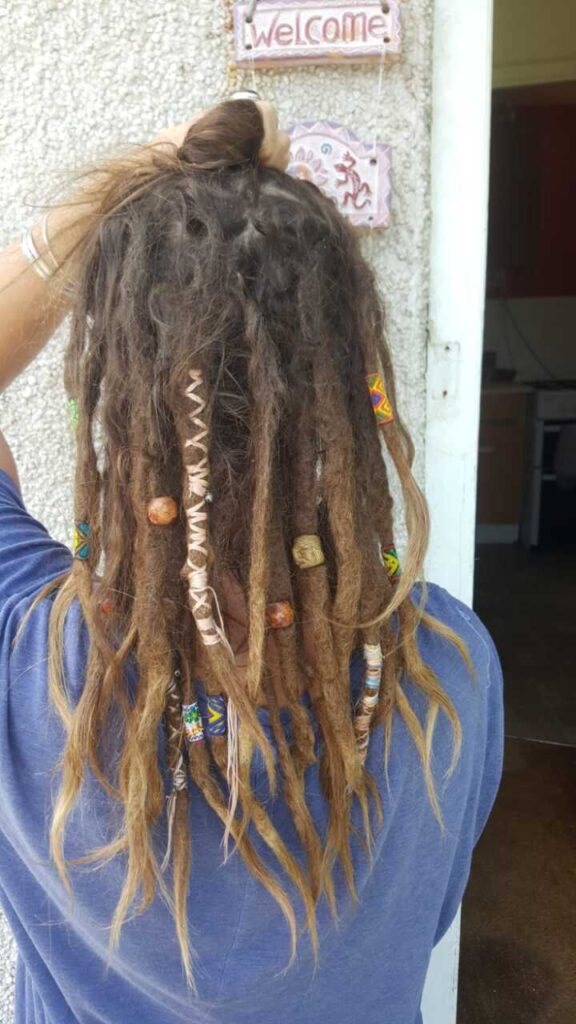
Bad Dreadlock Sections: Can Mapping Be Fixed Without Starting Again?
Bad Dreadlock Sections: Can Mapping Be Fixed Without Starting Again? You may already know that your dreadlock sections do not feel right, even if you cannot clearly explain what is wrong with them. Perhaps some dreadlocks feel much heavier than others. The roots may pull in different directions, certain sections may repeatedly merge, or the…
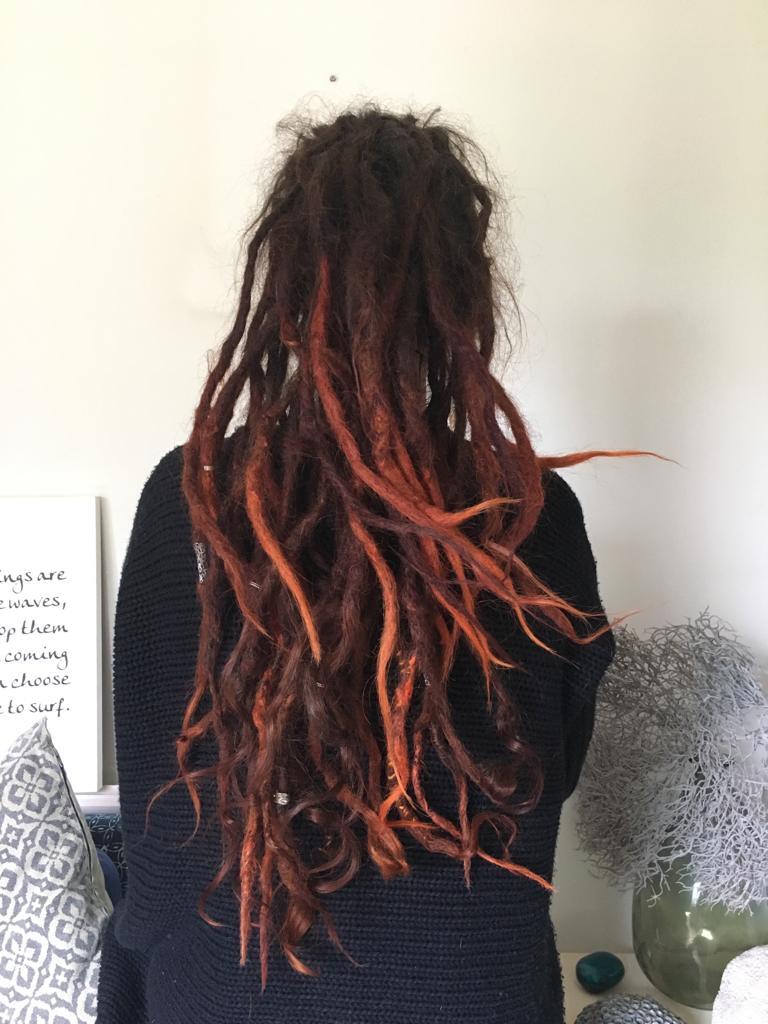
Overgrown Dreadlock Roots: Can They Be Remapped Without Losing Length?
Overgrown Dreadlock Roots: Can They Be Remapped Without Losing Length? If you have spent years growing your dreadlocks, the thought of losing that length can make it tempting to postpone dealing with overgrown roots. The dreadlocks may still look intact from the front, and you may be able to tie them back, style them and…

Dreadlocks Merging at the Root: What Is Going Wrong?
Dreadlocks Merging at the Root: What Is Going Wrong? You look in the mirror, touch the dreadlocks around the front and notice a little fuzz or regrowth. They may not look freshly maintained, but they do not appear disastrous either. What you cannot easily see is what is happening around the sides, through the crown…
Thinning Dreadlocks at the Root: What Usually Causes It?
Thinning Dreadlocks at the Root: What Usually Causes It? If one of your dreadlocks is becoming thinner at the root, it can be tempting to think it simply needs tightening, reinforcing or joining back together. Sometimes the dreadlock still feels attached. It may not be painful, and it may look almost normal unless you separate…

Can Weak Edges Recover After Heavy Dreadlocks?
Can Weak Edges Recover After Heavy Dreadlocks? Removing heavy dreadlocks can bring immediate relief. The front of the scalp may feel less sore, the pulling may stop, and the hairline can look softer once the weight is no longer drawing attention to every exposed area. That relief matters, but it does not always mean the…

Fragile Hairline & Dreadlocks: What Needs Assessing First?
Fragile Hairline & Dreadlocks: What Needs Assessing First? You may still have hair around the front of your scalp. It may grow, cover the skin and appear strong enough when you look in the mirror. Yet when you touch it, compare it with the hair further back or try to style it, you can feel…

Can You Get Dreadlocks After Traction Damage Has Already Started?
Dreadlocks After Traction Damage: What Needs Assessing First? If traction damage has already started and you still want dreadlocks, the answer is not always an immediate no. In some cases, dreadlocks may still be possible — but only if the scalp, root strength and remaining hair can genuinely support the direction you want to go…

Dreadlocks for Alopecia: When Coverage Is Possible & When It Is Not
Dreadlocks for Alopecia: Is Coverage Possible? If you are searching for dreadlocks for alopecia, you are probably not asking a casual style question. You may be looking at visible thinning, sparse areas, a fragile hairline, bald patches, or uneven density and wondering whether dreadlocks could help you feel more covered, more yourself, or less exposed.…

Crown Thinning & Dreadlocks: When Weight Becomes the Risk
Crown Thinning & Dreadlocks: When Weight Becomes the Risk If you have thinning around the crown and you are wondering whether dreadlocks are still possible, the answer is not a simple yes or no. Crown thinning dreadlocks may still be possible in some cases, but the crown has to be treated with far more caution…

Can You Add Dreadlock Extensions to Sparse Areas Without Causing More Loss?
Dreadlock Extensions Sparse Areas: What Needs Assessing First? If you have sparse areas and you are thinking about dreadlock extensions, the question is usually not just, “Can something be added there?” The more important question is whether that area can safely carry what you want added to it. That distinction matters. A sparse area can…

Are Partial Dreadlocks Safer Than a Full Head for Thinning Hair?
Partial Dreadlocks for Thinning Hair: Safer Than a Full Head? If your hair is thinning and you still want dreadlocks, it is very natural to wonder whether a partial head would be safer than committing to a full head. On the surface, it sounds logical. Less hair added, fewer dreadlocks, less weight, less risk. Sometimes…

Can Menopause-Related Hair Thinning Still Support Dreadlocks?
Menopause Hair Thinning & Dreadlocks: What Needs Assessing First? If your hair has started thinning during menopause or midlife, the question of dreadlocks can feel very different from how it might have felt ten years ago. It is not always just, “Can I get dreadlocks?” It is often, “Is my hair still strong enough?” “Will…
Fine Hair, Low Density & Dreadlocks: What Makes a Set Viable?
Fine Hair, Low Density & Dreadlocks: What Can Safely Hold? If you have fine hair or low density and you are wondering whether dreadlocks are still possible, the honest answer is: sometimes, yes — but not casually, and not from a dream photo alone. This is where a lot of people get caught. They find…

Dreadlocks for Hair That Breaks Before It Grows: What Is Still Safe?
Dreadlocks for Hair That Breaks Before It Grows: What Is Still Safe? If your hair grows but never seems to get past a certain length, dreadlocks can feel like a confusing dream. You may see new growth at the roots, but before the hair ever builds visible length or fullness, it snaps, thins, sheds, weakens,…
Hormonal Thinning & Dreadlocks: What Needs Assessing First?
Hormonal Thinning & Dreadlocks: What Needs Assessing First? When your hair starts changing because of hormones, dreadlocks can become a very emotional question. You may still have enough hair to look “workable” from the outside. You may still be able to tie it up, cover thinning areas, or imagine how dreadlocks could give your hair…

Thinning Hair & Dreadlocks: What Can Your Hair Safely Support?
Thinning Hair & Dreadlocks: What Can Your Hair Safely Support? If you have thinning hair and you want dreadlocks, the question usually feels bigger than hair. It is not just, “Can this be done?” It is, “Will this make my hair worse? Will I regret it? Am I about to put weight, tension, or structure…
Thinning Hairline Dreadlock Repair: Can Weak Edges Be Protected?
Thinning Hairline Dreadlock Repair: Can Weak Edges Be Protected? If your dreadlocks are still important to you but your hairline is starting to feel weaker, lighter, or more exposed, it can be difficult to know what to do next. You may be looking at the front and wondering whether it needs repair, whether it can…

Can Extremely Thick Hair Be Made Into Neat Dreadlocks?
Can Extremely Thick Hair Be Made Into Neat Dreadlocks? Extremely thick hair can absolutely be made into neat dreadlocks in many cases — but it should not be treated as automatically easy just because there is a lot of hair to work with. That is one of the biggest misunderstandings I see with thick hair…

Straight, Silky Hair & Dreadlocks: Why Standard Methods Fail
Will Straight, Silky Hair Hold Dreadlocks Properly Long Term? If you have straight, silky hair and you are wondering whether dreadlocks will actually hold, the honest answer is: possibly — but not through guesswork. Straight hair dreadlocks can look successful in the beginning. The hair may be healthy, strong, glossy, and long enough to appear…
Asian Hair & Dreadlocks: What Method Holds Best Long Term?
Asian Hair & Dreadlocks: What Method Holds Best Long Term? If you have Asian hair and you are thinking about getting dreadlocks, one of the biggest questions is usually not just “Can my hair dread?” It is: “What method will actually hold long term?” That question matters, because Asian hair can be deceptive. It can…

Can Straight, Resistant Asian Hair Hold Dreadlocks Properly?
Can Straight, Resistant Asian Hair Hold Dreadlocks Properly? Asian hair can absolutely hold dreadlocks in some cases — but it is not as simple as “you have lots of strong hair, so dreads will be easy.” That is one of the biggest misunderstandings I see with straight, resistant Asian hair. From the outside, the hair…

Can Fragile Roots Support Permanent Dreadlock Extensions?
Can Fragile Roots Support Permanent Dreadlock Extensions? What Needs Assessing First If you have fragile roots and you are wondering whether permanent dreadlock extensions are possible, the honest answer is: sometimes, yes — but not by copying someone else’s head of hair. This is where many people get caught. They send an amazing reference photo…

Can Thinning Temples Hold Dreadlock Extensions?
Can Thinning Temples Hold Dreadlock Extensions? What Needs Assessing First If your temples are thinning and you still want dreadlock extensions, the fear underneath that question is usually very real. Most people are not just asking whether the style will suit them. They are asking whether the weakest part of the hairline could end up…

Bald Spot Dreadlock Options: What Is Safe & What Is Not?
Bald Spot Dreadlock Options: What Is Safe & What Is Not? If you have a bald spot and you are wondering whether dreadlocks are still possible, the honest answer is: sometimes, yes — but not by guessing. A bald spot does not automatically rule dreadlocks out. In some cases, there may be more options than…

Receding Hairline & Dreadlocks: What Can Still Be Done Safely?
Receding Hairline & Dreadlocks: What Can Still Be Done Safely? If your hairline is already receding and you still want dreadlocks, the fear underneath that question is usually very real. Most people are not just wondering whether the style will suit them. They are wondering whether one wrong decision could take an already fragile front…

Can You Get Dreadlocks if Your Hair Is Thinning and Won’t Grow Past a Certain Length?
Receding Hairline & Dreadlocks: What Can Still Be Done Safely? If your hairline is already receding and you still want dreadlocks, the fear underneath that question is usually very clear. It is not just, “Will this suit me?” It is, “If I get this wrong, could I lose even more of the front?” That fear…
When Should You Not Get Dreadlocks? What to Assess First
When Should You Not Get Dreadlocks? What to Assess First Sometimes the problem is not dreadlocks themselves. The problem is trying to approach a complex hair situation with a standard dreadlock plan. If the hair is thinning, the scalp is sensitive, the roots are weak, or there are bald or fragile areas, the question is…
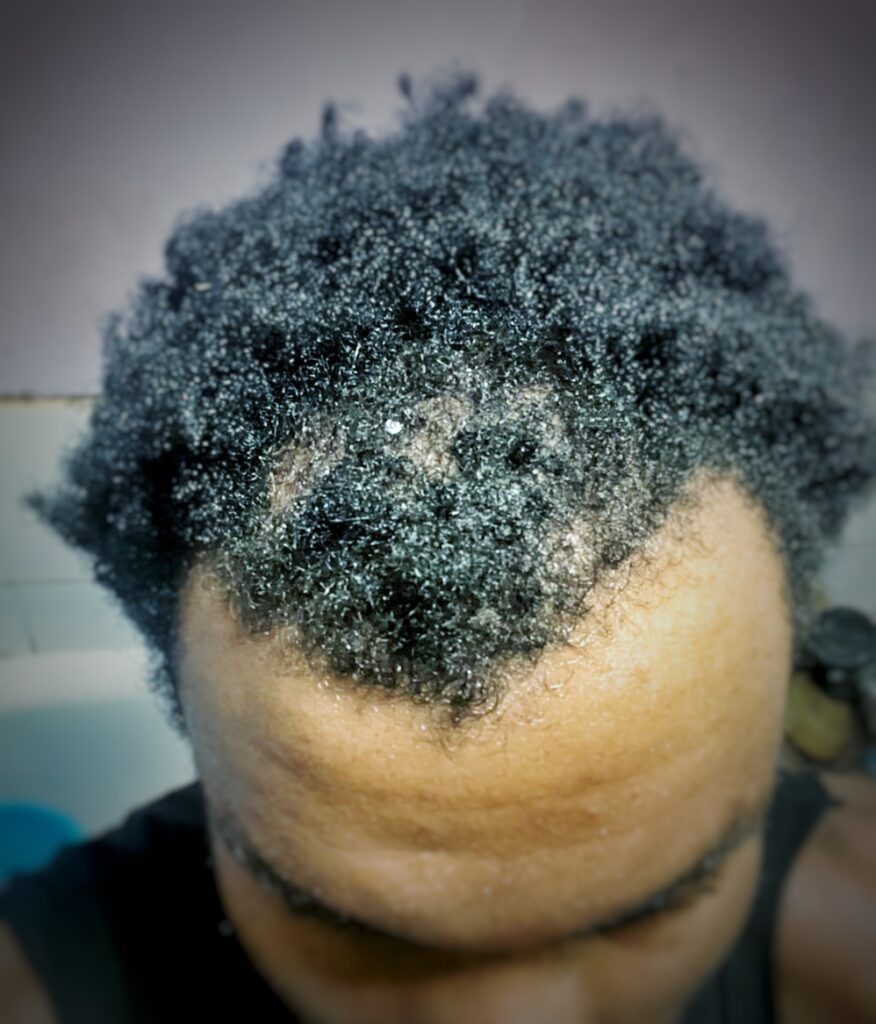
Can Dreadlocks Cause Thinning Hair? What Actually Causes the Damage
If your dreadlocks feel thinner at the root than they used to, this question is not theoretical. You are usually trying to work out whether dreadlocks themselves are the problem, whether the maintenance has become too harsh, or whether your hair has been carrying more stress than it can safely sustain. That distinction matters. Because…

Interlocking vs Intermatting: Why Method Matters for Thinning Hair
If you have fine, thinning, or already vulnerable hair, the method used at the root is not a small detail. It can be the difference between something that feels secure in the short term and something your hair can actually sustain over time. That is why the conversation around interlocking vs intermatting matters so much…

Dreadlock Repair After Damage: Can Thinning Hair Be Recovered?
When dreadlocks start going wrong, people usually know something feels off long before they know what to call it. The roots feel weaker. Certain sections start pulling. Some areas look thinner. Extensions stop feeling secure. The hairline changes. And what began as “maybe it just needs maintenance” turns into a quiet fear that something more…

Can You Get Dreadlock Extensions With 1 Inch of Hair? What Actually Decides
If you have been told your hair is too short for dreadlock extensions, you are not imagining how frustrating that feels. Especially if your hair is also fine, fragile, thinning, traction-affected, or already carrying the stress of previous work. At that point, this is no longer just a style question. You are trying to work…
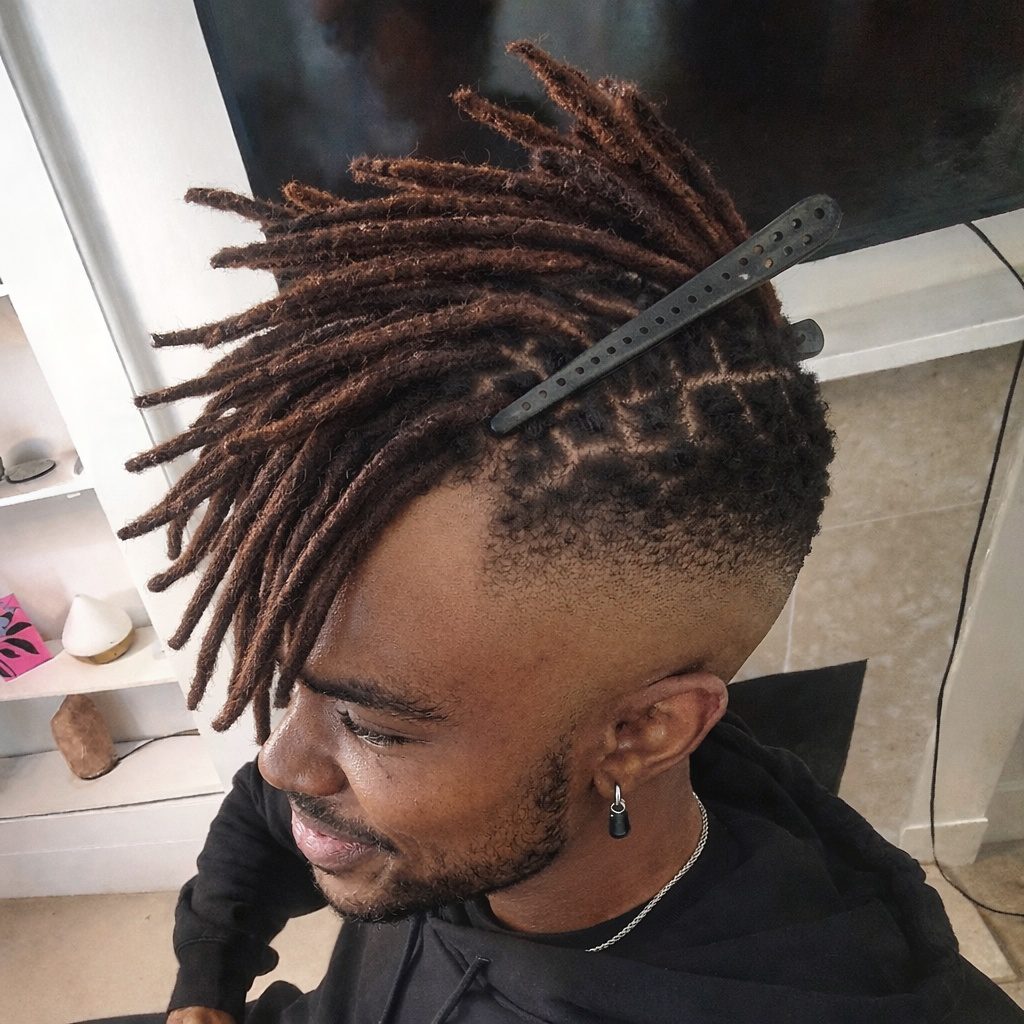
Do Dreadlocks Cause Traction Alopecia? What Actually Damages the Hairline
If your hairline already feels vulnerable, this question is not casual. You are not just asking whether dreadlocks look good. You are trying to work out whether they could cost you more density, more breakage, or more visible loss — or whether the real risk is simply having the wrong work done. That distinction matters.…