


Dreadlocks Merging at the Root: What Is Going Wrong?
You look in the mirror, touch the dreadlocks around the front and notice a little fuzz or regrowth. They may not look freshly maintained, but they do not appear disastrous either.
What you cannot easily see is what is happening around the sides, through the crown and across the back of the head.
That is often where dreadlocks merging at the root become much more than a tidiness problem. Hair may be crossing between neighbouring dreadlocks, sections may have lost their original boundaries, and some roots may be carrying far more hair—or far less support—than they were designed to hold.
People also become accustomed to how their dreadlocks feel. Pulling, heaviness or limited movement can gradually start to feel normal until someone points out that the scalp should not be working that hard.
The reassuring part is that unwanted merging does not automatically mean the entire set has to be removed. In many cases, something may still be possible.
The important question is not simply whether the roots can be separated, but whether the whole structure can be made safe, balanced and maintainable again.
Dreadlocks merging at the root: what needs to be understood?
- Dreadlocks merging at the root may be caused by more than overdue maintenance. The original sections may no longer be clear or structurally reliable.
- The front can look reasonably tidy while the sides and back are crossing, pulling or merging into completely different-sized sections.
- Root maintenance cannot be carried out properly until it is clear which hair belongs to which dreadlock and whether the layout is still suitable.
- Many sets can still be corrected without shaving everything off, but the safest route depends on an assessment of the entire scalp.
What Does It Mean When Dreadlocks Merge at the Root?
Root merging happens when hair from one dreadlock begins growing into, wrapping around or becoming attached to a neighbouring dreadlock.
At first, this may look like ordinary loose hair between the sections. You may notice two dreadlocks sitting closer together, a thicker area of regrowth or a root that no longer moves independently.
Over time, the distinction between the sections can become less clear. Two roots may begin behaving like one, several dreadlocks may become connected underneath, or the base of one dreadlock may start pulling hair from an area that was never meant to support it.
This can happen gradually enough that the person wearing the dreadlocks does not realise how much the structure has changed.
Intentional Joining Is Different From Uncontrolled Merging
Some people intentionally combine dreadlocks as part of a planned change in size or design. That is not the same as roots joining without a clear structural decision.
The concern is when the merging is unplanned, uneven or happening because the sections were never properly established—or have become too distorted to maintain accurately.
In those cases, making the roots look neater does not necessarily solve the underlying problem.
Why the Mirror Does Not Show the Whole Problem
Most people assess their dreadlocks from the front.
They can see the hairline, the top and perhaps a small part of each side. They may lift a few dreadlocks, smooth down some loose hair and decide that everything mostly looks all right.
But the back of the head may tell a completely different story.
I often see sets where the dreadlocks begin quite small and refined around the front, then gradually become thicker and less consistent towards the back. By the time you reach the lower crown or nape, the root sizes, weight distribution and spacing may bear little resemblance to what is happening at the front.
The wearer has not ignored the problem. They simply cannot see it properly.
Phone photographs can help, but even photographs only show the surface. They do not reveal how freely each dreadlock moves, where the pulling begins, whether several roots are connected underneath or how the scalp responds when the hair is repositioned.
Different Parts of the Scalp Do Not Behave Identically
Hair density is rarely perfectly even across the whole head.
One side may grow more densely than the other. The crown may be fuller while the temples are finer. There may be areas where the hair grows strongly but changes direction, and other areas where the roots are naturally more vulnerable.
A dreadlock layout that treats every part of the scalp as though it contains the same amount and strength of hair can begin to fail quietly.
This is one reason a set may look acceptable at first but become increasingly difficult to maintain as the hair grows.

Merging and thinning can appear together
A dreadlock may look fuller because it is collecting neighbouring hair while another root is gradually losing the support it needs.
Read: Thinning Dreadlocks at the Root — What Usually Causes It?
Why Root Merging Is Not Always a Simple Maintenance Issue
Root maintenance depends on having an identifiable structure to maintain.
Before any professional root work can be carried out properly, it needs to be clear which section belongs to each dreadlock. If the boundaries have disappeared, neighbouring roots have crossed or several sections have become tangled together, ordinary maintenance may not be the correct starting point.
Trying to maintain an unclear layout can make the set look tighter temporarily while reinforcing the wrong connections underneath.
This is where people can spend money repeatedly without resolving the actual issue. The dreadlocks may look better for a few weeks, then the roots merge again because the foundation was never properly addressed.
The problem is not necessarily that maintenance has been missed. It may be that the set has moved beyond maintenance and now needs structural correction.
Common Reasons Dreadlocks Begin Merging
There is rarely one universal cause. Several factors may be happening at the same time.
The Original Sections Were Inconsistent
Some sets begin with small dreadlocks around the visible front and much larger sections through the back.
This can create an immediate imbalance. The roots may be expected to support different amounts of hair and weight, while the visual design only appears consistent when viewed from the front.
As the hair grows, those differences become harder to hide and harder to maintain cleanly.
Loose Hair Has Repeatedly Been Placed Into the Wrong Root
Loose hair is not automatically a problem. Some regrowth and movement between maintenance appointments is normal.
The difficulty begins when loose hair is repeatedly assigned by proximity rather than by a clear understanding of the original structure.
Hair that naturally belongs to one section can gradually be absorbed into another, leaving one dreadlock overfilled and its neighbour under-supported.
That change may not be obvious after one appointment. It can build over months or years.
The Sections Have Become Blurred Through Long Regrowth
When roots are left for a long time, the original layout may become difficult to read.
This does not mean the person has failed or that the set is beyond help. It means maintenance may no longer be a matter of simply tightening what is visible.
The structure first needs to be understood before a safe decision can be made about what happens next.
Repeated Tension Has Altered How the Roots Sit
A dreadlock that has repeatedly been pulled in a particular direction may start drawing hair away from the area where it originally belonged.
This is especially important where density is uneven or where one part of the scalp is already carrying less support.
The root can appear thick while the surrounding area is becoming progressively more exposed.
The Dreadlock Size Does Not Match the Available Support
A thick or heavy dreadlock is not automatically unsafe. It becomes a concern when the root beneath it does not have enough stable hair to support its size, weight and movement.
When neighbouring hair begins joining that root, it can create the illusion of extra support.
In reality, the dreadlock may be borrowing stability from the sections around it.
That can move the problem rather than solve it.
What Can Quietly Happen If Root Merging Is Left
Not every merged root becomes a severe reconstruction case. However, the longer an unclear structure is repeatedly maintained, the fewer straightforward options may remain.
The first changes are often subtle.
You may notice that certain dreadlocks no longer move independently. The scalp may feel tight when the hair is worn up. One side may feel heavier, or maintenance may become increasingly uncomfortable in the same areas.
Later, the visible signs may become more pronounced:
- root sections appearing dramatically different in size
- dreadlocks pulling diagonally across the scalp
- neighbouring roots becoming connected underneath
- repeated soreness after maintenance
- thinner or more exposed areas between dreadlocks
- some dreadlocks carrying too much weight while others weaken
The hidden cost is not only aesthetic. A small structural problem can become more time-consuming and expensive to correct if work continues without identifying what is actually happening.
Discomfort Can Become Normal Without You Realising
Many people do not describe their dreadlocks as painful.
Instead, they say they feel heavy, awkward or difficult to move. They may avoid certain hairstyles, sleep in particular positions or instinctively hold the roots when tying the dreadlocks up.
Because the change happens gradually, they adapt.
It is sometimes only during an assessment—when individual areas are examined and the movement of the set is compared—that the person recognises how much pulling they had accepted as normal.
Comfort alone cannot diagnose the condition of a set. Some structural problems cause little immediate discomfort.
But persistent pulling, tenderness or restricted movement should not be dismissed simply because the dreadlocks still look acceptable from the front.
Why More Tightening Can Make the Wrong Problem Look Better
When roots are fuzzy or merged, the obvious instinct is to tighten them.
A tighter finish can create an immediate sense of order. The dreadlocks may sit closer to the scalp and the loose hair may appear controlled.
But neatness is not proof that the structure underneath is correct.
If the wrong hairs have been joined, tightening can secure that mistake more firmly. If two roots are already crossing, pulling them tighter can increase tension rather than restore independence.
If the sections are badly mismatched, maintenance may preserve the imbalance instead of correcting it.
This is why I do not treat this as a standard dreadlock service.
The first responsibility is not to make the roots look freshly maintained. It is to determine whether there is still a safe, coherent structure to work with.
Maintenance, Remapping and Reconstruction Are Not the Same Thing
These terms are sometimes used as though they describe different levels of the same appointment. They do not.
Root Maintenance
Maintenance works with an existing structure that is still clear, suitable and stable enough to preserve.
There may be regrowth, loose hair or general untidiness, but the underlying sections remain identifiable.
Section Remapping
Remapping becomes relevant when the existing layout no longer reflects how the dreadlocks need to sit or how the scalp can safely support them.
That does not mean drawing a new grid over the head and forcing every root into it. It requires decisions about the existing dreadlocks, available hair, density differences and long-term balance.
Those decisions are case-specific and cannot be responsibly made from generic instructions.
Dreadlock Reconstruction
Reconstruction may be needed where the issue affects several parts of the set, where previous work has created significant inconsistencies or where roots, lengths and weight need to be considered together.
The objective is not simply to separate everything. It is to understand what can be preserved, what needs changing and whether the proposed result will remain maintainable.
A person may arrive believing they need maintenance and discover that reconstruction is more appropriate.
Another person may fear they need a complete rebuild when only selected areas require intervention.
That distinction is precisely why assessment comes before booking the work.
When maintenance may no longer be enough
If the original sections cannot be identified, the dreadlocks are crossing into neighbouring areas or the weight distribution has become unstable, the set may need more than routine root work.

Can Merged Dreadlock Roots Be Fixed?
In many cases, yes. But possible and suitable are not the same thing.
It may be physically possible to separate two merged roots, but that does not confirm that both resulting sections will have enough stable hair to function safely.
It may be possible to redefine the layout, but not necessarily while preserving every dreadlock at its current size and position.
It may also be possible to retain most of the length while rebuilding the foundation beneath it.
The exact route depends on how established the merging is, the condition of the roots and whether the existing weight can still be supported.
A good assessment should not begin with a promise to save everything at any cost. It should begin by establishing what can be protected and what outcome is realistic.
Do You Have to Shave Your Dreadlocks Off?
No—not automatically.
People often assume that once the sections have merged or the roots look badly organised, the only option is to remove the entire set and start again.
That fear can cause them to delay seeking help. They continue with occasional tightening or avoid maintenance completely because they believe any professional will simply tell them to shave everything off.
In practice, many situations sit between routine maintenance and complete removal.
Some sets may be remapped. Some may need selected dreadlocks rebuilt, reduced, repositioned or reconstructed.
Others may need a more substantial change before they can become comfortable and maintainable again.
There are also cases where retaining every part of the existing set would not be responsible.
But that decision should be made after the full structure has been assessed—not from panic, a front-facing photograph or a one-size-fits-all opinion.
When root problems need repair
Thinning, shifting sections and merged roots can be signs that ordinary maintenance is no longer protecting the set. Repair should be based on what remains viable rather than simply making weak roots tighter.
Read: Dreadlock Repair After Damage — Can Thinning Hair Be Recovered?
Why Similar-Looking Sets May Need Different Decisions
Two people can send photographs that appear to show the same problem: fuzzy roots, uneven sections and several dreadlocks growing together.
One may have strong, dense roots underneath and a relatively recent merging issue. The other may have areas of reduced density, long-standing crossings or dreadlocks relying on hair from neighbouring sections for support.
They do not have the same starting point.
The dreadlock thickness, scalp density, growth direction, previous maintenance, weight, attachment history and condition of the surrounding hair can all change what is appropriate.
This is why copying a repair seen in a photograph or following broad maintenance advice can be expensive.
The visible symptom may be similar while the structural cause is completely different.
What a Specialist Assessment Needs to Clarify
A specialist assessment is not simply a closer version of looking in the mirror.
Its purpose is to establish the condition of the full set and decide which category of work is genuinely appropriate.
That includes understanding:
- whether the sections remain identifiable
- where roots are crossing or sharing hair
- whether the dreadlock sizes match the support beneath them
- how density changes across the scalp
- where discomfort or restricted movement is coming from
- whether maintenance, selective correction or reconstruction is the safer route
The assessment should create clarity without promising a result the scalp cannot support.
It also prevents the wrong appointment from being booked. Paying for routine maintenance first and discovering halfway through that the roots require reconstruction is not efficient for the client or responsible for the practitioner.
The paid planning step exists because the real value is not simply identifying that the roots are merged.
It is deciding what should—and should not—be done next.
When Caution Is Especially Important
Assessment becomes particularly important when merging appears alongside:
- thinning or exposed areas between dreadlocks
- previous traction damage
- weak temples or a fragile hairline
- very different dreadlock sizes across the scalp
- extensions that add considerable weight
- repeated soreness after maintenance
- unexplained snapping or weakening at the roots
- several previous repair attempts
These signs do not automatically mean the set cannot be saved.
They do mean that ordinary maintenance should not be treated as harmless while the cause remains unclear.
The Most Important Thing to Understand
Dreadlocks merging at the root are not always a sign of disaster. They are a sign that the existing structure needs to be understood before more work is added to it.
What looks like fuzz or overdue maintenance from the front may be connected to inconsistent sections, crossing roots, unequal density or weight being carried by the wrong areas.
The earlier that distinction is made, the more considered the available options tend to be.
You may not need to lose your dreadlocks. You may not need to start from the beginning.
But you do need to know whether the foundation can still be maintained, whether it needs remapping or whether selected reconstruction would protect the set more effectively.
That clarity cannot come from simply making the roots look tighter.
It comes from assessing the whole head and choosing the next service from the structure that is actually there—not the structure everyone is hoping is there.
FAQ: Dreadlocks Merging at the Root
Loose regrowth can begin crossing between neighbouring dreadlocks, particularly when the original sections have become unclear or maintenance has repeatedly placed hair into the nearest root.
The cause may be straightforward, but persistent merging can also indicate that the underlying layout is inconsistent or no longer functioning properly.
A small amount of loose hair movement can happen as dreadlocks grow, especially after a longer gap between appointments.
However, roots that are firmly connected, pulling from neighbouring sections or repeatedly merging in the same areas should be assessed rather than treated automatically as normal regrowth.
Forcing roots apart without understanding which hair belongs to each section can cause breakage, discomfort or leave one dreadlock with too little support.
What feels like a simple connection may involve several crossed sections underneath, so aggressive separation is not a safe substitute for assessment.
It may help when the sections are still clear and the merging is minor.
If the layout has become blurred, the dreadlocks are sharing hair or the roots are structurally uneven, routine maintenance may tighten the problem rather than correct it.
Not necessarily. Merging can develop through long regrowth, inconsistent maintenance, changes in density or the way the dreadlocks have been worn over time.
However, very uneven original sections or dreadlock sizes that do not match the available root support can make recurring problems more likely.
Often, existing length can be preserved while the root structure is reconsidered, but this depends on the condition of the dreadlocks and the available support beneath them.
Keeping every dreadlock exactly as it is may not always be suitable, even when much of the length can remain.
Shaving is not the automatic outcome.
Many cases may have options involving selective repair, remapping or reconstruction, although the safest plan can only be determined after the full scalp and existing set have been assessed.
Maintenance can reveal or intensify tension if roots are already crossing, sharing hair or being pulled into unsuitable sections.
A freshly tightened appearance may temporarily hide the structural issue while making the scalp feel more restricted.
If the dreadlocks still move independently and the sections are clear, maintenance may be enough.
When roots are crossed, section boundaries have disappeared, dreadlock sizes are highly inconsistent or the scalp feels persistently pulled, a planning assessment is the safer way to determine the correct service.
Get the Right Plan Before More Work Is Added
When roots are already merging, booking another maintenance appointment without understanding the structure can cost more than the assessment you were trying to avoid.
The £120 Dreadlock Planning Consultation is for existing sets that may need repair, remapping, reconstruction or a clearer plan before work begins.
It allows the full starting point to be reviewed so you are not paying for the wrong service—or allowing a correctable issue to become harder to resolve.
We BeLiEve YoU Are ALL AwEsOme & DeSeRve To StAnD Out

Permanent Dreadlock Extensions Cost UK: What Are You Actually Paying For?
Permanent Dreadlock Extensions Cost UK: What Are You Actually Paying For? If you are researching permanent dreadlock extensions cost in the UK, you have probably already decided that you want them. The question now is whether the quotation in front of you is realistic - and why another provider appears to be charging considerably more…

Can Permanent Dreadlock Extensions Be Removed Without Cutting Your Hair?
Can Permanent Dreadlock Extensions Be Removed Without Cutting Your Hair? If you want permanent dreadlock extensions but feel uneasy about the word permanent, you are not alone. You may love the idea of instant length while still needing to know that you have choices if your lifestyle, health, preferences or hair condition changes. In…

Do Permanent Dreadlock Extensions Damage Fine or Thinning Hair?
Do Permanent Dreadlock Extensions Damage Fine or Thinning Hair? If you have fine or thinning hair and you want permanent dreadlock extensions, the fear is usually not whether you like the look. You already do. The real question is whether adding permanent length and fullness could cost you more of the hair you are trying…

How Long Do Permanent Human Hair Dreadlock Extensions Last?
How Long Do Permanent Human Hair Dreadlock Extensions Last? If you are asking how long dreadlock extensions last, you are probably already beyond casual inspiration. You are considering a significant investment in permanent human-hair extensions and want to know whether they can genuinely become part of your life - or whether you could be paying…

Can I Add Permanent Dreadlock Extensions to Existing Locs Without Starting Again?
Can I Add Permanent Dreadlock Extensions to Existing Locs Without Starting Again? If you are considering adding dreadlock extensions to existing locs, the reassuring answer is that you may not have to sacrifice the dreadlocks you have spent years growing. Permanent length can often be added to an existing set. The important word is existing,…
How Often Do Permanent Dreadlock Extensions Need Maintenance?
How Often Do Permanent Dreadlock Extensions Need Maintenance? If you are seriously considering permanent dreadlock extensions, it is sensible to ask what happens after installation. You may be comfortable with the initial investment but worried that you are also signing up for constant appointments, unpredictable repair bills or a lifetime of high-maintenance hair. For many…
Dreadlock Repair Cost UK: Repair, Reconstruction or Start Again?
Dreadlock Repair Cost UK: Repair, Reconstruction or Start Again? If you are researching dreadlock repair cost UK, you probably already know that something needs professional attention. Your roots may be heavily grown out, several dreadlocks may be thinning or joining together, or previous work may be coming loose. What you do not yet know is…

Human Hair vs Synthetic Dreadlock Extensions: Which Is Better for Permanent Wear?
Human Hair vs Synthetic Dreadlock Extensions: Which Is Better for Permanent Wear? If you have already decided that you want dreadlock extensions, choosing between human hair and synthetic hair can feel like the final practical decision. One option may cost considerably more. Both can look convincing online. It is reasonable to ask whether human hair…

Dreadlock Extension Consultation: What Should Be Assessed Before Installation?
Dreadlock Extension Consultation: What Should Be Assessed Before Installation? A £120 dreadlock extension consultation can feel like an unnecessary extra when you already know you want extensions. You may have photographs, a preferred length and a clear picture of how you want to look. It is reasonable to wonder why you cannot simply send the…

How Many Dreadlock Extensions Do I Need for Fine or Thinning Hair?
How Many Dreadlock Extensions Do I Need for Fine or Thinning Hair? If you are asking, “How many dreadlock extensions do I need?”, you are probably no longer deciding whether you like dreadlocks. You are trying to picture the finished result: how full it will look, whether your scalp will show, what it may cost…

Cheap Dreadlock Extensions: Why Low Prices Cost More
Cheap Dreadlock Extensions: Why Low Prices Can Cost More Later Cheap dreadlock extensions can feel like the sensible choice when you have already decided that you want permanent extensions and the specialist quotation is considerably higher. You may be looking at two prices and wondering whether the difference reflects genuine expertise or whether you are…
Traction Alopecia & Dreadlocks: What Must Be Assessed Before Saying Yes?
Traction Alopecia & Dreadlocks: What Must Be Assessed Before Saying Yes? You may already know that tight styling, repeated pulling or the weight of previous extensions has changed your hairline or created thinner areas. You may still want dreadlocks, dreadlock extensions, repair or reconstruction—but you are frightened that trying again could make the existing loss…

Dreadlock Extensions Near Me: 10 Questions to Ask Before You Book
Dreadlock Extensions Near Me: 10 Questions to Ask Before You Book Searching for ‘dreadlock extensions near me’ usually means you are no longer casually collecting inspiration. You may be comparing prices, photographs, travel distances and appointment availability because you are ready to make the change. The difficulty is that a polished social-media page can show…

Dreadlock Repair or Start Again? What a Specialist Checks First
Dreadlock Repair or Start Again? What a Specialist Checks First You may have booked what sounds like a simple root-maintenance appointment because your dreadlocks feel untidy, loose or difficult to manage. Yet once the roots, sections and existing structure are looked at properly, the work may be far more involved than ordinary maintenance. The answer…

Permanent Dreadlock Extensions for Very Fine Hair
Permanent Dreadlock Extensions for Very Fine Hair: What Decides Suitability? If you have very fine hair, you may already have been told that permanent dreadlock extensions are impossible. You may also have found somebody willing to say yes immediately. Neither response gives you what you actually need: an honest assessment of what your own hair…

Uneven Hair Density & Dreadlocks: What Can Work?
Can You Get Dreadlocks With Uneven Hair Density Across the Scalp? Uneven hair density dreadlocks may still be possible. The important distinction is that having enough hair somewhere on the scalp is not the same as having equal support everywhere. This is where people can be caught out. Their dreadlocks may look healthy overall. Nothing…
Dreadlock Extensions Cost for Thinning Hair: Why Quotes Vary
Dreadlock Extensions Cost for Thinning Hair: Why Quotes Vary If you are researching the dreadlock extensions cost for thinning hair, you may already have a photograph saved on your phone. You know the length, colour and general look you want. What you do not want is to become emotionally invested, only to discover later that…

Can Thinning Edges Hold Dreadlocks Without Getting Worse?
Can Thinning Edges Hold Dreadlocks Without Getting Worse? Thinning edges dreadlocks may still be possible, but the honest answer is not found by looking only at how much hair appears to be present. The front of the scalp can look as though it has enough hair to work with while offering far less structural support…
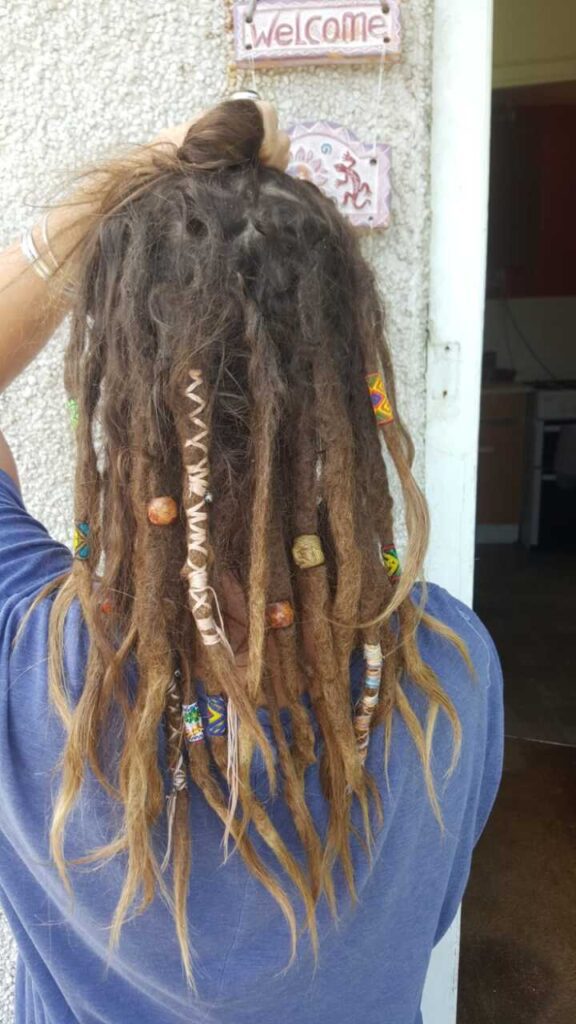
Bad Dreadlock Sections: Can Mapping Be Fixed Without Starting Again?
Bad Dreadlock Sections: Can Mapping Be Fixed Without Starting Again? You may already know that your dreadlock sections do not feel right, even if you cannot clearly explain what is wrong with them. Perhaps some dreadlocks feel much heavier than others. The roots may pull in different directions, certain sections may repeatedly merge, or the…
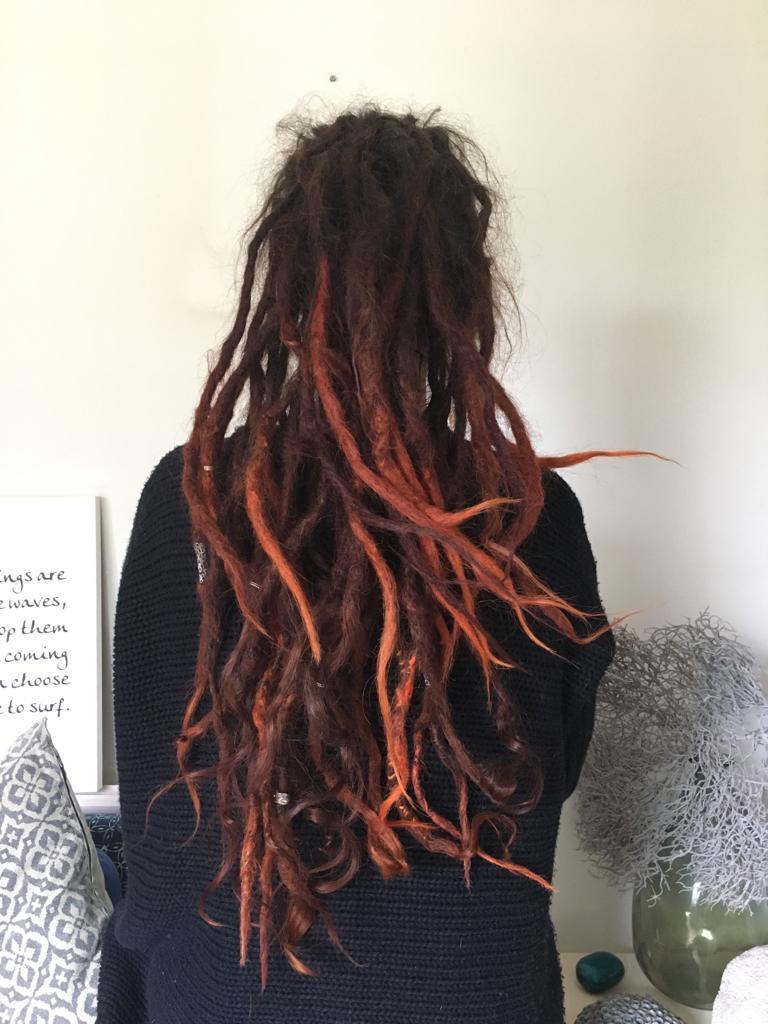
Overgrown Dreadlock Roots: Can They Be Remapped Without Losing Length?
Overgrown Dreadlock Roots: Can They Be Remapped Without Losing Length? If you have spent years growing your dreadlocks, the thought of losing that length can make it tempting to postpone dealing with overgrown roots. The dreadlocks may still look intact from the front, and you may be able to tie them back, style them and…

Thinning Dreadlocks at the Root: What Usually Causes It?
Thinning Dreadlocks at the Root: What Usually Causes It? If one of your dreadlocks is becoming thinner at the root, it can be tempting to think it simply needs tightening, reinforcing or joining back together. Sometimes the dreadlock still feels attached. It may not be painful, and it may look almost normal unless you separate…

Can Weak Edges Recover After Heavy Dreadlocks?
Can Weak Edges Recover After Heavy Dreadlocks? Removing heavy dreadlocks can bring immediate relief. The front of the scalp may feel less sore, the pulling may stop, and the hairline can look softer once the weight is no longer drawing attention to every exposed area. That relief matters, but it does not always mean the…

Fragile Hairline & Dreadlocks: What Needs Assessing First?
Fragile Hairline & Dreadlocks: What Needs Assessing First? You may still have hair around the front of your scalp. It may grow, cover the skin and appear strong enough when you look in the mirror. Yet when you touch it, compare it with the hair further back or try to style it, you can feel…

Can You Get Dreadlocks After Traction Damage Has Already Started?
Dreadlocks After Traction Damage: What Needs Assessing First? If traction damage has already started and you still want dreadlocks, the answer is not always an immediate no. In some cases, dreadlocks may still be possible — but only if the scalp, root strength and remaining hair can genuinely support the direction you want to go…

Dreadlocks for Alopecia: When Coverage Is Possible & When It Is Not
Dreadlocks for Alopecia: Is Coverage Possible? If you are searching for dreadlocks for alopecia, you are probably not asking a casual style question. You may be looking at visible thinning, sparse areas, a fragile hairline, bald patches, or uneven density and wondering whether dreadlocks could help you feel more covered, more yourself, or less exposed.…

Crown Thinning & Dreadlocks: When Weight Becomes the Risk
Crown Thinning & Dreadlocks: When Weight Becomes the Risk If you have thinning around the crown and you are wondering whether dreadlocks are still possible, the answer is not a simple yes or no. Crown thinning dreadlocks may still be possible in some cases, but the crown has to be treated with far more caution…

Can You Add Dreadlock Extensions to Sparse Areas Without Causing More Loss?
Dreadlock Extensions Sparse Areas: What Needs Assessing First? If you have sparse areas and you are thinking about dreadlock extensions, the question is usually not just, “Can something be added there?” The more important question is whether that area can safely carry what you want added to it. That distinction matters. A sparse area can…

Are Partial Dreadlocks Safer Than a Full Head for Thinning Hair?
Partial Dreadlocks for Thinning Hair: Safer Than a Full Head? If your hair is thinning and you still want dreadlocks, it is very natural to wonder whether a partial head would be safer than committing to a full head. On the surface, it sounds logical. Less hair added, fewer dreadlocks, less weight, less risk. Sometimes…

Can Menopause-Related Hair Thinning Still Support Dreadlocks?
Menopause Hair Thinning & Dreadlocks: What Needs Assessing First? If your hair has started thinning during menopause or midlife, the question of dreadlocks can feel very different from how it might have felt ten years ago. It is not always just, “Can I get dreadlocks?” It is often, “Is my hair still strong enough?” “Will…
Fine Hair, Low Density & Dreadlocks: What Makes a Set Viable?
Fine Hair, Low Density & Dreadlocks: What Can Safely Hold? If you have fine hair or low density and you are wondering whether dreadlocks are still possible, the honest answer is: sometimes, yes — but not casually, and not from a dream photo alone. This is where a lot of people get caught. They find…

Dreadlocks for Hair That Breaks Before It Grows: What Is Still Safe?
Dreadlocks for Hair That Breaks Before It Grows: What Is Still Safe? If your hair grows but never seems to get past a certain length, dreadlocks can feel like a confusing dream. You may see new growth at the roots, but before the hair ever builds visible length or fullness, it snaps, thins, sheds, weakens,…
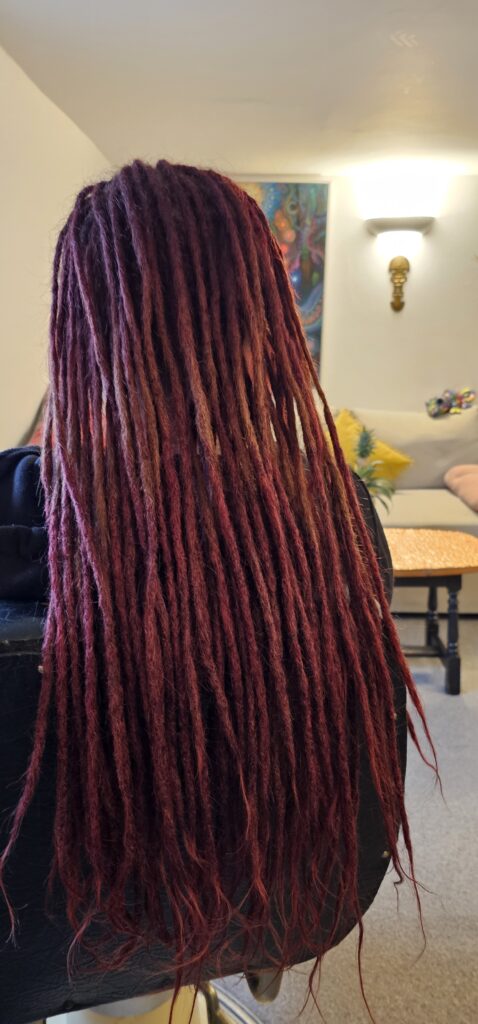
Hormonal Thinning & Dreadlocks: What Needs Assessing First?
Hormonal Thinning & Dreadlocks: What Needs Assessing First? When your hair starts changing because of hormones, dreadlocks can become a very emotional question. You may still have enough hair to look “workable” from the outside. You may still be able to tie it up, cover thinning areas, or imagine how dreadlocks could give your hair…

Thinning Hair & Dreadlocks: What Can Your Hair Safely Support?
Thinning Hair & Dreadlocks: What Can Your Hair Safely Support? If you have thinning hair and you want dreadlocks, the question usually feels bigger than hair. It is not just, “Can this be done?” It is, “Will this make my hair worse? Will I regret it? Am I about to put weight, tension, or structure…
Thinning Hairline Dreadlock Repair: Can Weak Edges Be Protected?
Thinning Hairline Dreadlock Repair: Can Weak Edges Be Protected? If your dreadlocks are still important to you but your hairline is starting to feel weaker, lighter, or more exposed, it can be difficult to know what to do next. You may be looking at the front and wondering whether it needs repair, whether it can…

Can Extremely Thick Hair Be Made Into Neat Dreadlocks?
Can Extremely Thick Hair Be Made Into Neat Dreadlocks? Extremely thick hair can absolutely be made into neat dreadlocks in many cases — but it should not be treated as automatically easy just because there is a lot of hair to work with. That is one of the biggest misunderstandings I see with thick hair…

Straight, Silky Hair & Dreadlocks: Why Standard Methods Fail
Will Straight, Silky Hair Hold Dreadlocks Properly Long Term? If you have straight, silky hair and you are wondering whether dreadlocks will actually hold, the honest answer is: possibly — but not through guesswork. Straight hair dreadlocks can look successful in the beginning. The hair may be healthy, strong, glossy, and long enough to appear…
Asian Hair & Dreadlocks: What Method Holds Best Long Term?
Asian Hair & Dreadlocks: What Method Holds Best Long Term? If you have Asian hair and you are thinking about getting dreadlocks, one of the biggest questions is usually not just “Can my hair dread?” It is: “What method will actually hold long term?” That question matters, because Asian hair can be deceptive. It can…

Can Straight, Resistant Asian Hair Hold Dreadlocks Properly?
Can Straight, Resistant Asian Hair Hold Dreadlocks Properly? Asian hair can absolutely hold dreadlocks in some cases — but it is not as simple as “you have lots of strong hair, so dreads will be easy.” That is one of the biggest misunderstandings I see with straight, resistant Asian hair. From the outside, the hair…

Can Fragile Roots Support Permanent Dreadlock Extensions?
Can Fragile Roots Support Permanent Dreadlock Extensions? What Needs Assessing First If you have fragile roots and you are wondering whether permanent dreadlock extensions are possible, the honest answer is: sometimes, yes — but not by copying someone else’s head of hair. This is where many people get caught. They send an amazing reference photo…

Can Thinning Temples Hold Dreadlock Extensions?
Can Thinning Temples Hold Dreadlock Extensions? What Needs Assessing First If your temples are thinning and you still want dreadlock extensions, the fear underneath that question is usually very real. Most people are not just asking whether the style will suit them. They are asking whether the weakest part of the hairline could end up…

Bald Spot Dreadlock Options: What Is Safe & What Is Not?
Bald Spot Dreadlock Options: What Is Safe & What Is Not? If you have a bald spot and you are wondering whether dreadlocks are still possible, the honest answer is: sometimes, yes — but not by guessing. A bald spot does not automatically rule dreadlocks out. In some cases, there may be more options than…

Receding Hairline & Dreadlocks: What Can Still Be Done Safely?
Receding Hairline & Dreadlocks: What Can Still Be Done Safely? If your hairline is already receding and you still want dreadlocks, the fear underneath that question is usually very real. Most people are not just wondering whether the style will suit them. They are wondering whether one wrong decision could take an already fragile front…

Can You Get Dreadlocks if Your Hair Is Thinning and Won’t Grow Past a Certain Length?
Receding Hairline & Dreadlocks: What Can Still Be Done Safely? If your hairline is already receding and you still want dreadlocks, the fear underneath that question is usually very clear. It is not just, “Will this suit me?” It is, “If I get this wrong, could I lose even more of the front?” That fear…
When Should You Not Get Dreadlocks? What to Assess First
When Should You Not Get Dreadlocks? What to Assess First Sometimes the problem is not dreadlocks themselves. The problem is trying to approach a complex hair situation with a standard dreadlock plan. If the hair is thinning, the scalp is sensitive, the roots are weak, or there are bald or fragile areas, the question is…
Can Dreadlocks Cause Thinning Hair? What Actually Causes the Damage
If your dreadlocks feel thinner at the root than they used to, this question is not theoretical. You are usually trying to work out whether dreadlocks themselves are the problem, whether the maintenance has become too harsh, or whether your hair has been carrying more stress than it can safely sustain. That distinction matters. Because…

Interlocking vs Intermatting: Why Method Matters for Thinning Hair
If you have fine, thinning, or already vulnerable hair, the method used at the root is not a small detail. It can be the difference between something that feels secure in the short term and something your hair can actually sustain over time. That is why the conversation around interlocking vs intermatting matters so much…

Dreadlock Repair After Damage: Can Thinning Hair Be Recovered?
When dreadlocks start going wrong, people usually know something feels off long before they know what to call it. The roots feel weaker. Certain sections start pulling. Some areas look thinner. Extensions stop feeling secure. The hairline changes. And what began as “maybe it just needs maintenance” turns into a quiet fear that something more…

Can You Get Dreadlock Extensions With 1 Inch of Hair? What Actually Decides
If you have been told your hair is too short for dreadlock extensions, you are not imagining how frustrating that feels. Especially if your hair is also fine, fragile, thinning, traction-affected, or already carrying the stress of previous work. At that point, this is no longer just a style question. You are trying to work…
Do Dreadlocks Cause Traction Alopecia? What Actually Damages the Hairline
If your hairline already feels vulnerable, this question is not casual. You are not just asking whether dreadlocks look good. You are trying to work out whether they could cost you more density, more breakage, or more visible loss — or whether the real risk is simply having the wrong work done. That distinction matters.…