

Overgrown Dreadlock Roots: Can They Be Remapped Without Losing Length?
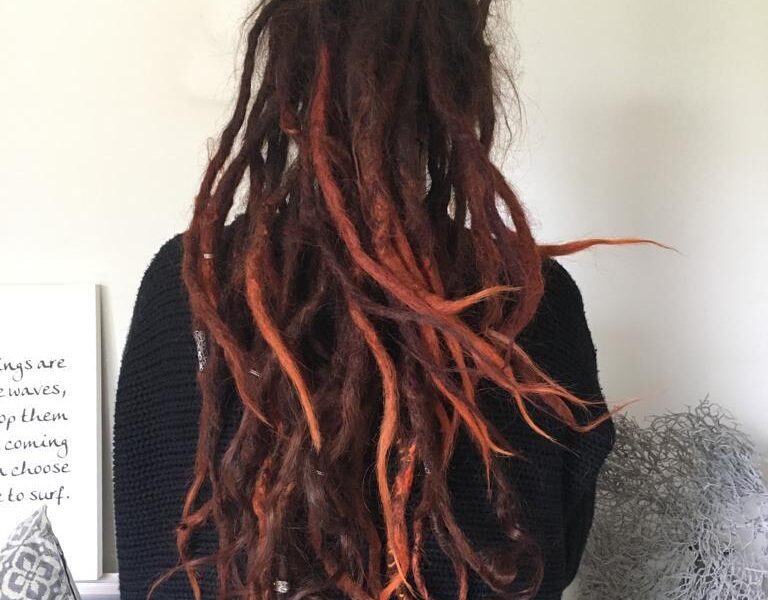
If you have spent years growing your dreadlocks, the thought of losing that length can make it tempting to postpone dealing with overgrown roots. The dreadlocks may still look intact from the front, and you may be able to tie them back, style them and carry on as normal.
Yet something may no longer feel quite right.
The roots might pull when you move your hair. Certain areas may feel heavy, tender or difficult to separate. Washing and drying may have become awkward. You may also notice that several dreadlocks seem to be growing from one blurred area rather than from their own clear sections.
Overgrown dreadlock roots remapped by a specialist may allow the existing length to be protected, but only when the underlying sections can be safely identified and re-established. Once the roots have become heavily intermatted, this is no longer simply a matter of tidying regrowth.
The important question is not only whether the dreadlocks can be tightened. It is whether there is still a sound root structure underneath them that can support the length you are trying to keep.
Overgrown roots: what needs to be understood first?
- Overgrown dreadlock roots may sometimes be remapped while protecting the existing length, but this depends on the condition of the roots, scalp and original sections.
- Once several roots have matted together, ordinary maintenance may tighten the visible regrowth without correcting the underlying structure.
- Delaying assessment can lead to discomfort, thinning areas and repeated maintenance costs, followed by a more complex reconstruction later.
- Cutting or shaving is not automatically necessary, but the set must be assessed before anyone promises that all the length can be retained.
When Overgrown Roots Stop Being a Maintenance Issue
Normal dreadlock maintenance assumes that each dreadlock still has an identifiable section and that the new growth can be worked without disturbing the wider structure of the set.
Heavy overgrowth changes that assumption.
Loose hair may have travelled into neighbouring sections. Two or more dreadlocks may have started sharing the same root area. Some sections may have widened while others have become smaller, stretched or difficult to locate. The set may still appear presentable from above, but the foundation underneath can be significantly less organised.
In practice, people often book what they believe will be a routine maintenance appointment. They expect the roots to be tightened, the loose hair to be neatened and the dreadlocks to look refreshed.
But when the roots are already matted together, ordinary maintenance cannot safely be treated as the automatic next step. Before more work is added, the existing layout needs to be understood.
This is the point where maintenance may need to become root correction, remapping or reconstruction.
The Visible Regrowth Is Not Always the Real Problem
When you look in the mirror, you are mainly seeing the front, the hairline and the top of the set. You may notice some fuzz or a few loose hairs and assume that is the extent of the problem.
The sides, crown and back can tell a completely different story.
Those areas are harder to examine properly without clear photographs, video or another person looking closely. It is possible for the dreadlocks at the front to remain relatively defined while the sections farther back have become wider, crossed over or fused together.
Hair density is also rarely identical across the entire scalp. One area may naturally contain more hair than another. Previous stylists may have created smaller dreadlocks at the front and progressively larger ones toward the back. Repeated maintenance by different people can add further inconsistencies.
The result is not simply untidy regrowth. It can become an uneven structure carrying years of length.

Are your roots merging rather than simply overgrown?
Root merging can look like ordinary fuzz at first, particularly when the front of the set still appears controlled. The deeper issue may be that the root structure itself is changing.
Why Generic Root Maintenance Can Make the Problem More Expensive
When several roots have already knitted together, tightening what is visible does not necessarily resolve what is happening underneath.
It may make the surface look neater for a short period, while the same crossover, pulling or uneven distribution remains in place. The client then pays for maintenance repeatedly without the foundation ever becoming more stable.
This is where generic maintenance can quietly increase the eventual cost.
More hair may become incorporated into the wrong sections. Existing dreadlocks may begin pulling against one another. A smaller or weaker area may end up carrying part of the weight from a neighbouring dreadlock. The longer this continues, the more involved the correction may become.
What could have been an earlier structural assessment can turn into a longer process involving separation, redesign, repair or reconstruction.
In the most difficult cases, some length may eventually need to be removed because the roots have become too compromised to support what is attached to them.
That is not inevitable, but it is one reason not to continue applying routine maintenance to a set that no longer has routine roots.
Discomfort Can Become Normalised
One of the quieter risks is that people become accustomed to the way their dreadlocks feel.
They may always sleep on the same side, avoid certain hairstyles or instinctively hold the hair when moving it. They may feel pulling in one area but assume that mature dreadlocks are simply supposed to feel heavy or uncomfortable.
Sometimes the person only recognises how much tension they were carrying after the structure has been properly reassessed.
The scalp is not a blank surface on which every dreadlock can be placed or maintained in exactly the same way. Different areas can have different density, sensitivity and carrying capacity.
A section that feels secure is not automatically a section that is functioning well.
Pain should not be treated as proof that maintenance is working. Neither should persistent discomfort be accepted as the unavoidable price of keeping long dreadlocks.
What Delaying Root Remapping May Cost
The fear behind this search is usually length loss. However, length is not the only thing at stake.
Delaying assessment can also cost:
- continued pulling or discomfort across particular areas of the scalp
- thinning where hair is repeatedly drawn into an unsuitable section
- more extensive correction once the roots can no longer be clearly distinguished
- repeated payments for maintenance that does not address the structural issue
- additional time spent undoing work before proper reconstruction can begin
- reduced options for protecting all of the original length
The expensive part is not always the assessment.
The expensive part can be reaching the right specialist after several more maintenance appointments, only to discover that the work now needs to be partially undone before it can be rebuilt properly.
That process takes time, care and specialist judgement. It may also place more demand on hair that has already spent months or years under an uneven structure.
This is why I do not treat heavily overgrown or intermatted roots as a standard dreadlock service.
Can Overgrown Dreadlock Roots Be Remapped Without Losing Length?
Sometimes, yes.
A set can look extremely overgrown and still contain enough usable structure for much of the existing length to be protected. In other cases, some areas may be recoverable while others require a different decision.
The condition cannot be judged from the length alone.
Assessment needs to consider the way the dreadlocks are currently connected to the scalp, whether the original sections can still be identified, how density is distributed and whether any areas already appear strained or weakened.
This is the difference between possibility and suitability.
Remapping may be possible in theory, but it must also be suitable for that exact head of hair. A promise to preserve every dreadlock before the root structure has been assessed would not be responsible.
Protecting Length Begins at the Root
Clients understandably focus on the dreadlock they can see and hold. The length represents time, identity and commitment. Some people have spent ten or twenty years growing their set.
But the visible dreadlock can only remain if its foundation can continue supporting it.
Protecting length therefore does not mean avoiding the roots. It means addressing the root structure before more of the set becomes involved.
In some cases, the safest route may protect nearly all of the existing length. In others, selective changes may be needed to create a more stable foundation.
There may also be cases where preserving every centimetre would place too much demand on the remaining hair.
A good assessment does not begin with a promise. It begins by establishing what can realistically be saved without sacrificing the scalp and roots to preserve the appearance of length.
Why Remapping Is Different From Tightening
Tightening deals with new growth within an existing structure.
Remapping deals with whether that structure still makes sense.
That distinction matters because a set may have changed substantially since it was first created. Hair density can change. Dreadlocks can become longer and heavier. Sections can drift, merge or stretch. Different maintenance approaches may have been used over the years.
Remapping is therefore not simply drawing fresh partings around existing dreadlocks. Nor is it a one-size-fits-all separation service.
The whole set needs to be viewed as a connected structure before decisions are made about individual roots.
This includes understanding what is happening at the front, sides, crown and back—not only working on whichever area appears most visibly overgrown.
The public explanation can tell you why that distinction matters. It cannot responsibly tell you exactly how your own roots should be divided, redistributed or reconstructed.
That is where specialist assessment retains its value.
When maintenance has become reconstruction
If roots have merged, sections have become inconsistent or the set no longer sits comfortably, the next appointment may require more than routine upkeep.

When Caution Is Needed Before Any More Root Work
Not every overgrown set should be worked on immediately.
Caution may be necessary when the scalp is already extremely sore, when areas appear visibly thinner than before, when several heavy dreadlocks are pulling from a small shared section or when the root structure cannot be identified clearly from photographs alone.
It may also be unwise to proceed with ordinary maintenance when the set contains a mixture of older repairs, extensions, joins or work carried out using several different approaches.
These cases are not automatically hopeless.
They simply require a clearer decision before more tension or technique is added.
Sometimes the most protective answer is not an immediate maintenance appointment. It may be a staged correction, a deeper reconstruction plan or a pause while a particular concern is investigated.
Being advised not to proceed with generic maintenance is not the same as being told that you must lose your dreadlocks.
It means the length is being considered alongside the condition of the foundation carrying it.
Why Specialist Assessment Matters Before More Maintenance
A photograph of the front of the hair cannot show how the complete set is functioning.
For an overgrown or structurally unclear set, assessment provides the opportunity to look at the areas the client cannot easily see, understand how the dreadlocks currently relate to one another and determine whether ordinary maintenance is still appropriate.
The purpose is not to turn a simple service into something complicated.
It is to stop a structural problem being repeatedly treated as a cosmetic one.
A specialist assessment can clarify whether the next step is:
- genuine routine maintenance
- root remapping
- localised repair
- wider reconstruction
- staged correction
- or a different protective decision
The technical distinctions behind those routes remain part of the professional service.
The reader does not need a public tutorial for separating roots. They need an accurate decision about what their own set now requires.
This is also where the value becomes commercially clear. Paying for assessment can be far less costly than continuing to spend money on maintenance that leaves the same problem underneath.
The Clearest Way to Think About Overgrown Roots
Overgrown roots do not automatically mean your dreadlocks must be cut out.
They also do not automatically mean that a standard maintenance appointment can put everything right.
The deciding factor is the condition of the structure underneath the visible regrowth.
When sections remain identifiable and the roots are stable, maintenance may still be straightforward. When sections have fused, crossed or become uneven, the work may need to move into remapping or reconstruction.
Acting earlier usually leaves more room for protective decisions.
The goal is not to preserve length at any cost. It is to protect as much of the existing set as the roots can realistically continue to carry, while reducing the risk of further discomfort, thinning and avoidable correction.
You should leave an assessment knowing what is happening, what category of work is actually required and whether retaining your length is genuinely compatible with a healthier long-term structure.
FAQ: Overgrown Dreadlock Roots
In some cases, roots can be re-established while much or all of the existing length is retained. This depends on how deeply the sections have merged, how the dreadlocks are connected and whether the surrounding hair can safely support the reconstructed layout.
No responsible specialist can guarantee complete length retention before assessing the whole set.
Routine maintenance is more likely to be appropriate when the dreadlocks still have clear, independent sections and the main issue is ordinary regrowth.
Remapping may be needed when sections have blurred, several dreadlocks are sharing one root area or the set pulls and moves as one connected mass.
The distinction can be difficult to see from the front of a mirror, which is why full views of the crown, sides and back matter.
Root remapping does not automatically require shortening the visible dreadlock length. However, preserving every dreadlock depends on the condition of the roots supporting it.
If part of the set is no longer safely attached or the foundation has become too compromised, selective changes may be necessary to protect the remaining hair.
Mature dreadlocks can feel heavier than a new set, but ongoing pulling, tenderness or discomfort should not simply be accepted as normal.
It may indicate that weight, merging or uneven sections are placing too much demand on particular areas.
Assessment can help distinguish ordinary regrowth from a structure that is no longer sitting comfortably.
Working on the visible regrowth before understanding the merged structure can make later correction more difficult.
Hair may be tightened into the wrong area, further fixing crossover hair into sections that were already unclear.
The structure should be understood before more maintenance is applied.
This can happen when loose hair from neighbouring sections mats together over time.
It does not automatically mean the dreadlocks must be removed, but it does mean they should not be treated as several ordinary independent roots without assessment.
The available options depend on the strength, density and arrangement of the hair underneath.
No. Some sets become very overgrown without significant hair loss or root damage.
The concern is what has happened within that regrowth—whether the original sections remain usable or whether the roots have fused and begun pulling unevenly.
Assessment separates a heavily overdue maintenance case from a structural correction case.
Shaving is not automatically the only solution.
Remapping, selective repair or reconstruction may still be possible, even when the roots look extremely blurred.
However, the longer a compromised structure is repeatedly tightened or left under strain, the fewer protective options may remain.
There is no universal number of weeks or months because hair growth, density, section size, dreadlock length and maintenance history differ.
The practical warning signs are increasing discomfort, roots growing into one another, difficulty moving individual dreadlocks and visible changes in density.
Once those signs are present, assessment is more useful than waiting for the next routine maintenance interval.
The £120 Precision Dreadlock Planning Consultation is the appropriate starting point for understanding whether your existing set requires maintenance, remapping, repair or a wider corrective plan.
It allows the structure to be assessed before an appointment or service is recommended.
Protect the Length by Assessing the Foundation
If your dreadlocks still hold the length you love but the roots have become fused, uncomfortable or impossible to understand, adding more generic maintenance may reduce your options rather than protect them.
The £120 Precision Dreadlock Planning Consultation is designed to establish what your existing structure now requires and whether your length can be safely retained through remapping, repair or reconstruction.
We BeLiEve YoU Are ALL AwEsOme & DeSeRve To StAnD Out

Permanent Dreadlock Extensions Cost UK: What Are You Actually Paying For?
Permanent Dreadlock Extensions Cost UK: What Are You Actually Paying For? If you are researching permanent dreadlock extensions cost in the UK, you have probably already decided that you want them. The question now is whether the quotation in front of you is realistic - and why another provider appears to be charging considerably more…

Can Permanent Dreadlock Extensions Be Removed Without Cutting Your Hair?
Can Permanent Dreadlock Extensions Be Removed Without Cutting Your Hair? If you want permanent dreadlock extensions but feel uneasy about the word permanent, you are not alone. You may love the idea of instant length while still needing to know that you have choices if your lifestyle, health, preferences or hair condition changes. In…

Do Permanent Dreadlock Extensions Damage Fine or Thinning Hair?
Do Permanent Dreadlock Extensions Damage Fine or Thinning Hair? If you have fine or thinning hair and you want permanent dreadlock extensions, the fear is usually not whether you like the look. You already do. The real question is whether adding permanent length and fullness could cost you more of the hair you are trying…

How Long Do Permanent Human Hair Dreadlock Extensions Last?
How Long Do Permanent Human Hair Dreadlock Extensions Last? If you are asking how long dreadlock extensions last, you are probably already beyond casual inspiration. You are considering a significant investment in permanent human-hair extensions and want to know whether they can genuinely become part of your life - or whether you could be paying…

Can I Add Permanent Dreadlock Extensions to Existing Locs Without Starting Again?
Can I Add Permanent Dreadlock Extensions to Existing Locs Without Starting Again? If you are considering adding dreadlock extensions to existing locs, the reassuring answer is that you may not have to sacrifice the dreadlocks you have spent years growing. Permanent length can often be added to an existing set. The important word is existing,…
How Often Do Permanent Dreadlock Extensions Need Maintenance?
How Often Do Permanent Dreadlock Extensions Need Maintenance? If you are seriously considering permanent dreadlock extensions, it is sensible to ask what happens after installation. You may be comfortable with the initial investment but worried that you are also signing up for constant appointments, unpredictable repair bills or a lifetime of high-maintenance hair. For many…
Dreadlock Repair Cost UK: Repair, Reconstruction or Start Again?
Dreadlock Repair Cost UK: Repair, Reconstruction or Start Again? If you are researching dreadlock repair cost UK, you probably already know that something needs professional attention. Your roots may be heavily grown out, several dreadlocks may be thinning or joining together, or previous work may be coming loose. What you do not yet know is…

Human Hair vs Synthetic Dreadlock Extensions: Which Is Better for Permanent Wear?
Human Hair vs Synthetic Dreadlock Extensions: Which Is Better for Permanent Wear? If you have already decided that you want dreadlock extensions, choosing between human hair and synthetic hair can feel like the final practical decision. One option may cost considerably more. Both can look convincing online. It is reasonable to ask whether human hair…

Dreadlock Extension Consultation: What Should Be Assessed Before Installation?
Dreadlock Extension Consultation: What Should Be Assessed Before Installation? A £120 dreadlock extension consultation can feel like an unnecessary extra when you already know you want extensions. You may have photographs, a preferred length and a clear picture of how you want to look. It is reasonable to wonder why you cannot simply send the…

How Many Dreadlock Extensions Do I Need for Fine or Thinning Hair?
How Many Dreadlock Extensions Do I Need for Fine or Thinning Hair? If you are asking, “How many dreadlock extensions do I need?”, you are probably no longer deciding whether you like dreadlocks. You are trying to picture the finished result: how full it will look, whether your scalp will show, what it may cost…

Cheap Dreadlock Extensions: Why Low Prices Cost More
Cheap Dreadlock Extensions: Why Low Prices Can Cost More Later Cheap dreadlock extensions can feel like the sensible choice when you have already decided that you want permanent extensions and the specialist quotation is considerably higher. You may be looking at two prices and wondering whether the difference reflects genuine expertise or whether you are…
Traction Alopecia & Dreadlocks: What Must Be Assessed Before Saying Yes?
Traction Alopecia & Dreadlocks: What Must Be Assessed Before Saying Yes? You may already know that tight styling, repeated pulling or the weight of previous extensions has changed your hairline or created thinner areas. You may still want dreadlocks, dreadlock extensions, repair or reconstruction—but you are frightened that trying again could make the existing loss…

Dreadlock Extensions Near Me: 10 Questions to Ask Before You Book
Dreadlock Extensions Near Me: 10 Questions to Ask Before You Book Searching for ‘dreadlock extensions near me’ usually means you are no longer casually collecting inspiration. You may be comparing prices, photographs, travel distances and appointment availability because you are ready to make the change. The difficulty is that a polished social-media page can show…

Dreadlock Repair or Start Again? What a Specialist Checks First
Dreadlock Repair or Start Again? What a Specialist Checks First You may have booked what sounds like a simple root-maintenance appointment because your dreadlocks feel untidy, loose or difficult to manage. Yet once the roots, sections and existing structure are looked at properly, the work may be far more involved than ordinary maintenance. The answer…

Permanent Dreadlock Extensions for Very Fine Hair
Permanent Dreadlock Extensions for Very Fine Hair: What Decides Suitability? If you have very fine hair, you may already have been told that permanent dreadlock extensions are impossible. You may also have found somebody willing to say yes immediately. Neither response gives you what you actually need: an honest assessment of what your own hair…

Uneven Hair Density & Dreadlocks: What Can Work?
Can You Get Dreadlocks With Uneven Hair Density Across the Scalp? Uneven hair density dreadlocks may still be possible. The important distinction is that having enough hair somewhere on the scalp is not the same as having equal support everywhere. This is where people can be caught out. Their dreadlocks may look healthy overall. Nothing…
Dreadlock Extensions Cost for Thinning Hair: Why Quotes Vary
Dreadlock Extensions Cost for Thinning Hair: Why Quotes Vary If you are researching the dreadlock extensions cost for thinning hair, you may already have a photograph saved on your phone. You know the length, colour and general look you want. What you do not want is to become emotionally invested, only to discover later that…

Can Thinning Edges Hold Dreadlocks Without Getting Worse?
Can Thinning Edges Hold Dreadlocks Without Getting Worse? Thinning edges dreadlocks may still be possible, but the honest answer is not found by looking only at how much hair appears to be present. The front of the scalp can look as though it has enough hair to work with while offering far less structural support…
Bad Dreadlock Sections: Can Mapping Be Fixed Without Starting Again?
Bad Dreadlock Sections: Can Mapping Be Fixed Without Starting Again? You may already know that your dreadlock sections do not feel right, even if you cannot clearly explain what is wrong with them. Perhaps some dreadlocks feel much heavier than others. The roots may pull in different directions, certain sections may repeatedly merge, or the…

Dreadlocks Merging at the Root: What Is Going Wrong?
Dreadlocks Merging at the Root: What Is Going Wrong? You look in the mirror, touch the dreadlocks around the front and notice a little fuzz or regrowth. They may not look freshly maintained, but they do not appear disastrous either. What you cannot easily see is what is happening around the sides, through the crown…
Thinning Dreadlocks at the Root: What Usually Causes It?
Thinning Dreadlocks at the Root: What Usually Causes It? If one of your dreadlocks is becoming thinner at the root, it can be tempting to think it simply needs tightening, reinforcing or joining back together. Sometimes the dreadlock still feels attached. It may not be painful, and it may look almost normal unless you separate…

Can Weak Edges Recover After Heavy Dreadlocks?
Can Weak Edges Recover After Heavy Dreadlocks? Removing heavy dreadlocks can bring immediate relief. The front of the scalp may feel less sore, the pulling may stop, and the hairline can look softer once the weight is no longer drawing attention to every exposed area. That relief matters, but it does not always mean the…

Fragile Hairline & Dreadlocks: What Needs Assessing First?
Fragile Hairline & Dreadlocks: What Needs Assessing First? You may still have hair around the front of your scalp. It may grow, cover the skin and appear strong enough when you look in the mirror. Yet when you touch it, compare it with the hair further back or try to style it, you can feel…

Can You Get Dreadlocks After Traction Damage Has Already Started?
Dreadlocks After Traction Damage: What Needs Assessing First? If traction damage has already started and you still want dreadlocks, the answer is not always an immediate no. In some cases, dreadlocks may still be possible — but only if the scalp, root strength and remaining hair can genuinely support the direction you want to go…

Dreadlocks for Alopecia: When Coverage Is Possible & When It Is Not
Dreadlocks for Alopecia: Is Coverage Possible? If you are searching for dreadlocks for alopecia, you are probably not asking a casual style question. You may be looking at visible thinning, sparse areas, a fragile hairline, bald patches, or uneven density and wondering whether dreadlocks could help you feel more covered, more yourself, or less exposed.…

Crown Thinning & Dreadlocks: When Weight Becomes the Risk
Crown Thinning & Dreadlocks: When Weight Becomes the Risk If you have thinning around the crown and you are wondering whether dreadlocks are still possible, the answer is not a simple yes or no. Crown thinning dreadlocks may still be possible in some cases, but the crown has to be treated with far more caution…

Can You Add Dreadlock Extensions to Sparse Areas Without Causing More Loss?
Dreadlock Extensions Sparse Areas: What Needs Assessing First? If you have sparse areas and you are thinking about dreadlock extensions, the question is usually not just, “Can something be added there?” The more important question is whether that area can safely carry what you want added to it. That distinction matters. A sparse area can…

Are Partial Dreadlocks Safer Than a Full Head for Thinning Hair?
Partial Dreadlocks for Thinning Hair: Safer Than a Full Head? If your hair is thinning and you still want dreadlocks, it is very natural to wonder whether a partial head would be safer than committing to a full head. On the surface, it sounds logical. Less hair added, fewer dreadlocks, less weight, less risk. Sometimes…

Can Menopause-Related Hair Thinning Still Support Dreadlocks?
Menopause Hair Thinning & Dreadlocks: What Needs Assessing First? If your hair has started thinning during menopause or midlife, the question of dreadlocks can feel very different from how it might have felt ten years ago. It is not always just, “Can I get dreadlocks?” It is often, “Is my hair still strong enough?” “Will…
Fine Hair, Low Density & Dreadlocks: What Makes a Set Viable?
Fine Hair, Low Density & Dreadlocks: What Can Safely Hold? If you have fine hair or low density and you are wondering whether dreadlocks are still possible, the honest answer is: sometimes, yes — but not casually, and not from a dream photo alone. This is where a lot of people get caught. They find…

Dreadlocks for Hair That Breaks Before It Grows: What Is Still Safe?
Dreadlocks for Hair That Breaks Before It Grows: What Is Still Safe? If your hair grows but never seems to get past a certain length, dreadlocks can feel like a confusing dream. You may see new growth at the roots, but before the hair ever builds visible length or fullness, it snaps, thins, sheds, weakens,…
Hormonal Thinning & Dreadlocks: What Needs Assessing First?
Hormonal Thinning & Dreadlocks: What Needs Assessing First? When your hair starts changing because of hormones, dreadlocks can become a very emotional question. You may still have enough hair to look “workable” from the outside. You may still be able to tie it up, cover thinning areas, or imagine how dreadlocks could give your hair…

Thinning Hair & Dreadlocks: What Can Your Hair Safely Support?
Thinning Hair & Dreadlocks: What Can Your Hair Safely Support? If you have thinning hair and you want dreadlocks, the question usually feels bigger than hair. It is not just, “Can this be done?” It is, “Will this make my hair worse? Will I regret it? Am I about to put weight, tension, or structure…
Thinning Hairline Dreadlock Repair: Can Weak Edges Be Protected?
Thinning Hairline Dreadlock Repair: Can Weak Edges Be Protected? If your dreadlocks are still important to you but your hairline is starting to feel weaker, lighter, or more exposed, it can be difficult to know what to do next. You may be looking at the front and wondering whether it needs repair, whether it can…

Can Extremely Thick Hair Be Made Into Neat Dreadlocks?
Can Extremely Thick Hair Be Made Into Neat Dreadlocks? Extremely thick hair can absolutely be made into neat dreadlocks in many cases — but it should not be treated as automatically easy just because there is a lot of hair to work with. That is one of the biggest misunderstandings I see with thick hair…

Straight, Silky Hair & Dreadlocks: Why Standard Methods Fail
Will Straight, Silky Hair Hold Dreadlocks Properly Long Term? If you have straight, silky hair and you are wondering whether dreadlocks will actually hold, the honest answer is: possibly — but not through guesswork. Straight hair dreadlocks can look successful in the beginning. The hair may be healthy, strong, glossy, and long enough to appear…
Asian Hair & Dreadlocks: What Method Holds Best Long Term?
Asian Hair & Dreadlocks: What Method Holds Best Long Term? If you have Asian hair and you are thinking about getting dreadlocks, one of the biggest questions is usually not just “Can my hair dread?” It is: “What method will actually hold long term?” That question matters, because Asian hair can be deceptive. It can…

Can Straight, Resistant Asian Hair Hold Dreadlocks Properly?
Can Straight, Resistant Asian Hair Hold Dreadlocks Properly? Asian hair can absolutely hold dreadlocks in some cases — but it is not as simple as “you have lots of strong hair, so dreads will be easy.” That is one of the biggest misunderstandings I see with straight, resistant Asian hair. From the outside, the hair…

Can Fragile Roots Support Permanent Dreadlock Extensions?
Can Fragile Roots Support Permanent Dreadlock Extensions? What Needs Assessing First If you have fragile roots and you are wondering whether permanent dreadlock extensions are possible, the honest answer is: sometimes, yes — but not by copying someone else’s head of hair. This is where many people get caught. They send an amazing reference photo…

Can Thinning Temples Hold Dreadlock Extensions?
Can Thinning Temples Hold Dreadlock Extensions? What Needs Assessing First If your temples are thinning and you still want dreadlock extensions, the fear underneath that question is usually very real. Most people are not just asking whether the style will suit them. They are asking whether the weakest part of the hairline could end up…

Bald Spot Dreadlock Options: What Is Safe & What Is Not?
Bald Spot Dreadlock Options: What Is Safe & What Is Not? If you have a bald spot and you are wondering whether dreadlocks are still possible, the honest answer is: sometimes, yes — but not by guessing. A bald spot does not automatically rule dreadlocks out. In some cases, there may be more options than…

Receding Hairline & Dreadlocks: What Can Still Be Done Safely?
Receding Hairline & Dreadlocks: What Can Still Be Done Safely? If your hairline is already receding and you still want dreadlocks, the fear underneath that question is usually very real. Most people are not just wondering whether the style will suit them. They are wondering whether one wrong decision could take an already fragile front…

Can You Get Dreadlocks if Your Hair Is Thinning and Won’t Grow Past a Certain Length?
Receding Hairline & Dreadlocks: What Can Still Be Done Safely? If your hairline is already receding and you still want dreadlocks, the fear underneath that question is usually very clear. It is not just, “Will this suit me?” It is, “If I get this wrong, could I lose even more of the front?” That fear…
When Should You Not Get Dreadlocks? What to Assess First
When Should You Not Get Dreadlocks? What to Assess First Sometimes the problem is not dreadlocks themselves. The problem is trying to approach a complex hair situation with a standard dreadlock plan. If the hair is thinning, the scalp is sensitive, the roots are weak, or there are bald or fragile areas, the question is…
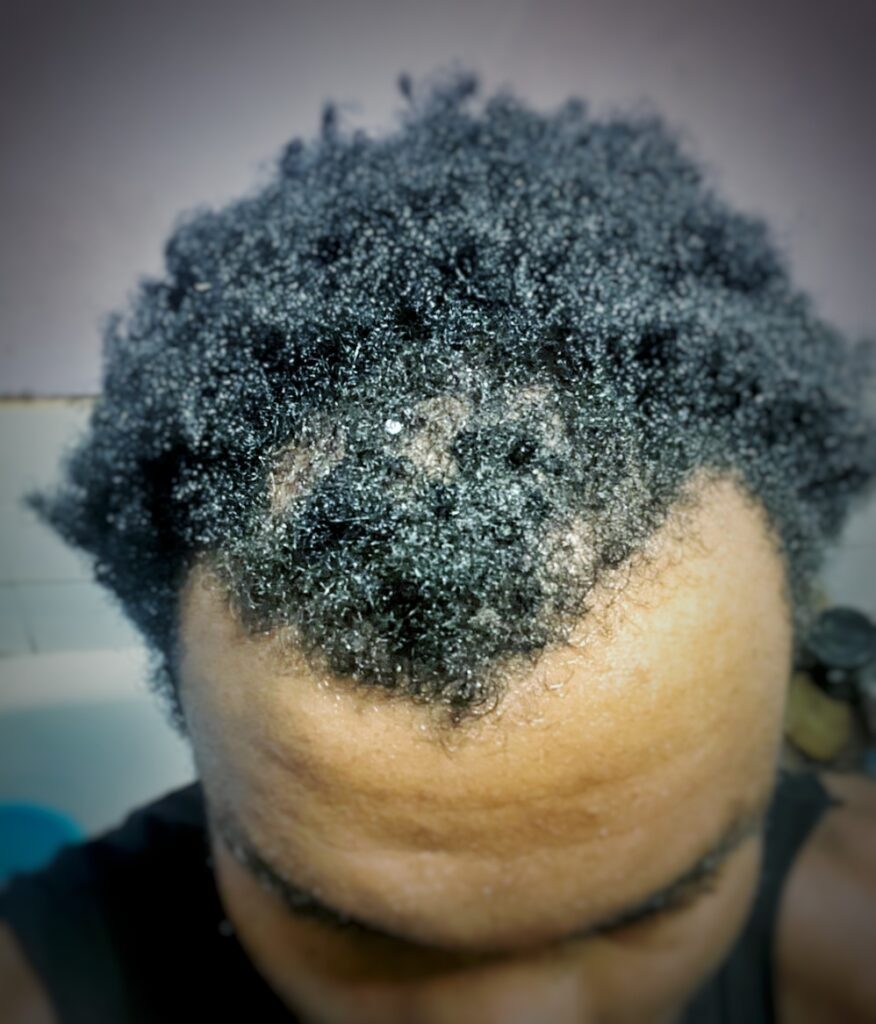
Can Dreadlocks Cause Thinning Hair? What Actually Causes the Damage
If your dreadlocks feel thinner at the root than they used to, this question is not theoretical. You are usually trying to work out whether dreadlocks themselves are the problem, whether the maintenance has become too harsh, or whether your hair has been carrying more stress than it can safely sustain. That distinction matters. Because…

Interlocking vs Intermatting: Why Method Matters for Thinning Hair
If you have fine, thinning, or already vulnerable hair, the method used at the root is not a small detail. It can be the difference between something that feels secure in the short term and something your hair can actually sustain over time. That is why the conversation around interlocking vs intermatting matters so much…

Dreadlock Repair After Damage: Can Thinning Hair Be Recovered?
When dreadlocks start going wrong, people usually know something feels off long before they know what to call it. The roots feel weaker. Certain sections start pulling. Some areas look thinner. Extensions stop feeling secure. The hairline changes. And what began as “maybe it just needs maintenance” turns into a quiet fear that something more…

Can You Get Dreadlock Extensions With 1 Inch of Hair? What Actually Decides
If you have been told your hair is too short for dreadlock extensions, you are not imagining how frustrating that feels. Especially if your hair is also fine, fragile, thinning, traction-affected, or already carrying the stress of previous work. At that point, this is no longer just a style question. You are trying to work…
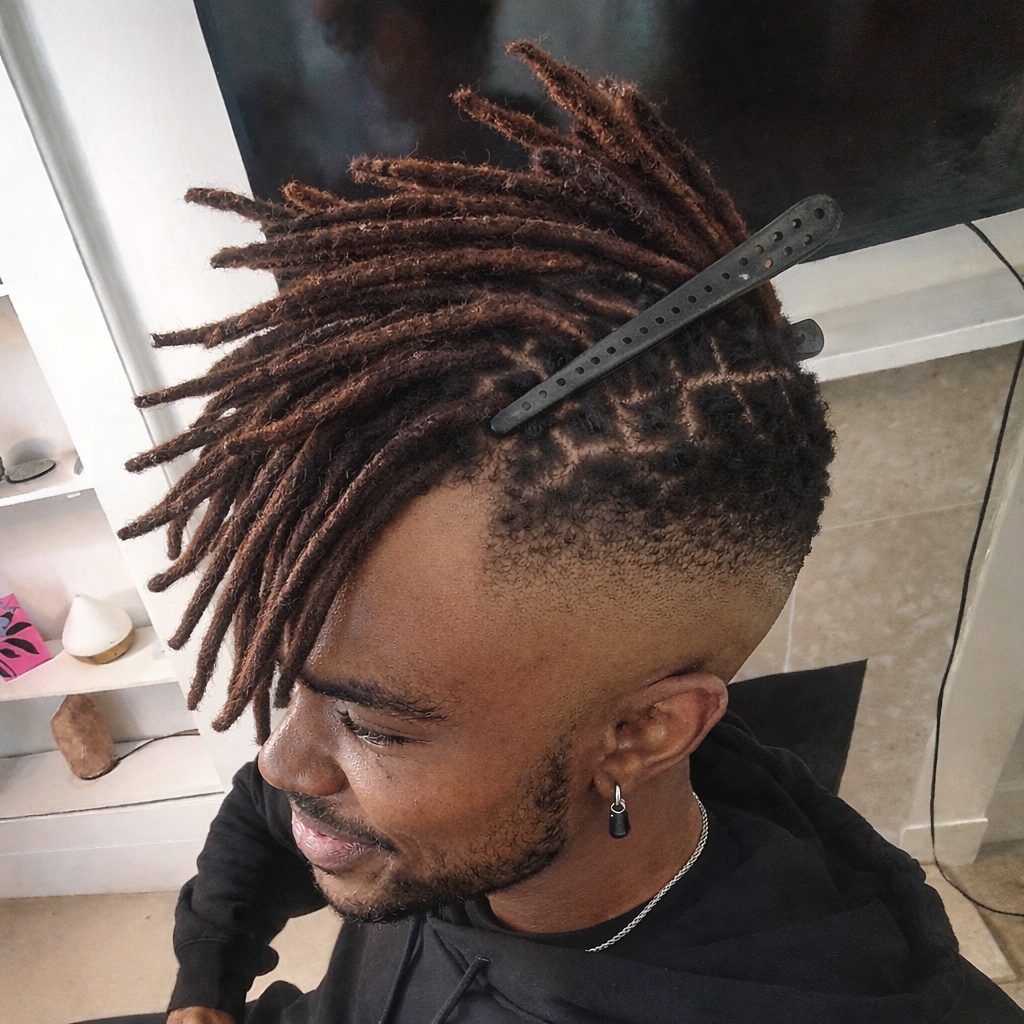
Do Dreadlocks Cause Traction Alopecia? What Actually Damages the Hairline
If your hairline already feels vulnerable, this question is not casual. You are not just asking whether dreadlocks look good. You are trying to work out whether they could cost you more density, more breakage, or more visible loss — or whether the real risk is simply having the wrong work done. That distinction matters.…