


Can Extremely Thick Hair Be Made Into Neat Dreadlocks?
Extremely thick hair can absolutely be made into neat dreadlocks in many cases — but it should not be treated as automatically easy just because there is a lot of hair to work with.
That is one of the biggest misunderstandings I see with thick hair dreadlocks. From the outside, dense hair can look like the perfect starting point. It has presence. It has volume. It may feel strong, heavy, full and resistant. So it is easy to assume that dreadlocks will hold beautifully without much concern.
But extremely thick, coarse or stubborn hair has its own risks.
The issue is not only whether the hair can be dreaded. The issue is whether it can stay neat, structured, comfortable and manageable over time. If the sectioning, weight and long-term shape are misjudged at the beginning, the hair can start behaving very differently once it has been washed, slept on, moved around, maintained and lived in.
This is where people can end up shocked. What felt exciting at first can turn into a correction problem later — loose roots, fluffy sections, heavy dreadlocks, bulky areas, or hair that no longer feels controlled. And by that point, the person has often already paid once, lost trust in the original work, and now has to pay again to have it assessed properly.
Quick Summary
- Extremely thick hair can be made into neat dreadlocks, but density does not automatically mean the result will be easy, light or low-maintenance.
- The biggest risk is misjudging section size, bulk and weight, especially when the hair looks strong enough to “take anything.”
- Poorly planned thick hair dreadlocks may look fine at first, then become loose, fluffy, heavy, dirty-looking or difficult to control over time.
- A specialist assessment helps decide whether your hair can safely hold the shape, size and long-term structure you want before you spend money on the wrong work.
Thick Hair Does Not Automatically Mean Easy Dreadlocks
People often assume that thick hair is the “best” hair for dreadlocks because there is plenty of it. And yes, having density can be useful. It may give more material to work with, more coverage, and more visual impact once the dreadlocks are properly designed.
But density also creates pressure.
Extremely thick hair can carry more bulk than expected. It can make each section feel heavier. It can create roots that feel too full, too wide or too difficult to keep neat. If the section size is not judged correctly, the whole head can quickly become larger, heavier and more demanding than the person imagined.
This is why I do not treat this as a standard dreadlock service.
The goal is not just to “get dreadlocks in.” The goal is to create dreadlocks that the hair can actually support, that sit well on the head, and that still make sense months and years later.
What People Misunderstand About Extremely Thick, Coarse Hair
With very thick or coarse hair, the mistake is often assuming strength equals simplicity.
In practice, I often see people come in with hair that looks powerful and abundant, but the behaviour of the hair is much more stubborn than expected. It may resist forming cleanly. It may expand. It may push outward. It may refuse to sit neatly if the original structure was not right.
This does not mean the hair is bad for dreadlocks.
It means the hair needs to be understood properly before the work begins. A head of extremely thick hair may need a very different plan from someone with soft, fine, medium-density or fragile hair. The shape, density, sectioning, scalp coverage, root strength and desired final look all matter.
When that assessment is skipped, the person often only discovers the problem later.
Why Thick Hair Dreadlocks Can Become Too Bulky
Bulk is one of the biggest hidden issues with thick hair dreadlocks.
A person may arrive with a dream photo and imagine neat, slim, controlled dreadlocks. But if their natural hair density is much heavier than the photo they are referencing, copying that look directly may not be realistic. The result can become wider, fuller or heavier than expected.
This is especially important around the roots.
If too much hair is placed into each section, the dreadlock may look impressive at first, but over time it can become harder to control. The roots may feel bulky. The dreadlocks may sit awkwardly. The whole head can begin to feel too full, especially when the person wanted a neat, refined finish rather than an oversized result.
The danger is that this does not always look wrong immediately. On day one, the hair may look exciting, full and dramatic. Later, the weight and behaviour of the sections start telling the truth.
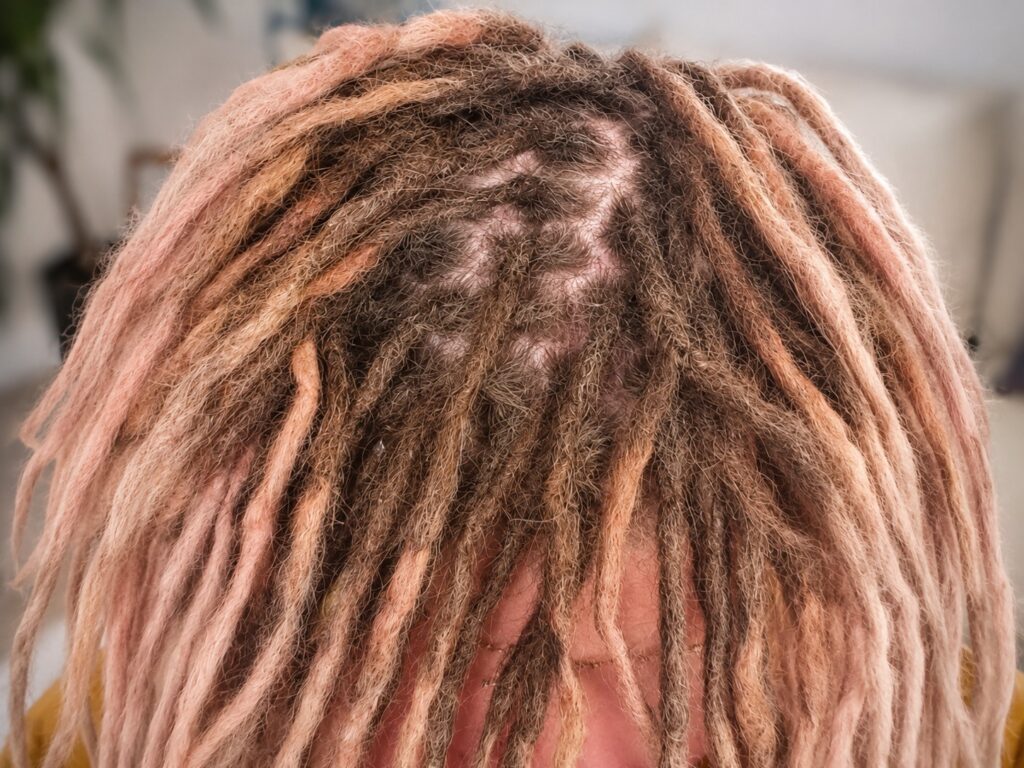
If your hair is thick but also resistant
Thick hair can still behave unpredictably. If your hair is not only dense but also straight, coarse, silky or resistant, the question becomes even more specific: not just whether it can dread, but whether it can hold long term.
Read the related article on resistant hair and long-term hold
Before thick hair becomes a correction job, get the structure assessed properly
The expensive mistake is not asking whether thick hair can dread. It is assuming thick hair does not need specialist planning first.
What Can Quietly Go Wrong Over Time
The main issue with poorly planned thick hair dreadlocks is that the early result can be misleading.
At first, it may look like the job has been done. The client may feel relieved. The hairdresser may feel confident. The dreadlocks may appear neat enough in the mirror. But if the structure has not been planned around the true density and behaviour of that hair, the problems may begin later.
What tends to happen over time is that the dreadlocks can start becoming loose, fluffy or unstable. Loose hair may begin collecting around the surface. Sections can look less clean. The dreadlocks may start holding dirt, lint or debris more easily because the surface has opened up instead of staying controlled.
That is when the person realises this is not just “normal new dreadlock fluff.”
It can become a bigger issue: the hair no longer feels intentional, the finish looks messy, and maintenance becomes more about constant correction than healthy long-term care.
Why “Fluffy” Thick Hair Can Become A Bigger Problem
Some looseness is normal in dreadlock development, especially with new dreadlocks. But with extremely thick, coarse or stubborn hair, excessive fluffiness can create a very different problem.
When the hair opens up too much, it can start attracting dirt and debris. The dreadlocks may lose their clean shape. The surface can become rough, swollen or inconsistent. Instead of looking like neat dreadlocks settling in, the hair can begin to look uncontrolled.
This matters because many clients with thick hair do not want a wild or neglected-looking result. They want dreadlocks that still look designed. They may have professional careers, public-facing work, creative reputations, or simply a strong personal standard for how they present themselves.
The emotional cost is real. It is frustrating to spend money on something you were excited about, then feel like your hair is becoming harder to manage rather than easier.
The Expensive Mistake: Paying Twice
The expensive mistake is not asking, “Can thick hair have dreadlocks?”
The expensive mistake is assuming it does not need assessment.
When extremely thick hair is misjudged, the client may end up paying twice — sometimes more. First, they pay for the original work. Then, once the dreadlocks begin loosening, fluffing, swelling or falling out of shape, they need someone else to assess what has happened.
By that point, it may no longer be a simple tidy-up.
It may require correction, redesign, root restructuring, reconstruction, removal of unsuitable work, or a completely fresh plan. The client also has to go through the emotional labour of finding someone new, asking the right questions, explaining what went wrong, and trying to work out who they can trust.
That is why assessment before action is not an extra. In complex hair cases, it is protection.
Thinking about starting fresh dreadlocks?
Fresh dreadlocks are not just about creating sections and forming hair. With extremely thick hair, the early design affects how heavy, neat, comfortable and manageable the dreadlocks may become later.


Why Copying A Trend Photo Can Mislead You
A lot of people arrive with a photo of the dreadlocks they want. That can be helpful for understanding taste, shape, length and overall direction. But it can also create a false expectation if the hair in the photo is completely different from the hair on your head.
Thick hair does not always translate into the same dreadlock size as a reference photo.
If the person in the image has finer hair, lower density, different texture or a different scalp pattern, copying the same section count or visual style may create a very different result. On extremely thick hair, the same idea may become heavier, wider or fuller than expected.
This is where specialist judgement matters.
The right plan should not come from a trend photo alone. It should come from the behaviour of the hair itself: how dense it is, how coarse it is, how it sits, how it moves, where it is heavier, where it is weaker, and what kind of long-term finish the person actually wants to live with.
Uneven Density Can Change The Whole Plan
Even when someone describes their hair as “very thick,” the density is rarely identical across the entire scalp.
The back may be much thicker than the front. The crown may behave differently from the sides. The hairline may be finer. Some areas may carry weight easily, while other areas may need more protection. This is especially important when the person wants a neat result rather than a bulky or uneven one.
If those differences are ignored, the dreadlocks can become mismatched.
Some sections may become too large. Others may feel weak. Some may sit neatly, while others puff out or pull differently. Over time, that mismatch can affect the overall shape of the head, the comfort of the roots, and the maintenance pattern moving forward.
This is why the assessment is not just about looking at the hair and saying yes or no. It is about understanding what different areas of the head can safely support.
When Thick Hair Dreadlocks May Be Possible
Extremely thick hair can often be a strong foundation for dreadlocks when the plan is right.
It may allow for a powerful, full, sculptural result. It may create beautiful coverage and a strong visual finish. It may hold well when the sectioning, density and long-term structure have been properly considered from the beginning.
But possibility is not the same as suitability.
A person may be able to have dreadlocks, but not in the exact size, number, shape or weight they originally imagined. Sometimes the safest result requires adjusting the plan so the dreadlocks can stay neat without becoming too heavy or too difficult to manage.
That is not a downgrade. It is how you avoid paying later for work that looked exciting but was not built for your actual hair.
When Caution Is Needed
Caution is needed when the hair is extremely dense but the client wants a very slim, lightweight or low-maintenance result.
It is also needed when the hair is thick in some areas but weaker in others. The strongest-looking part of the head can distract from areas that need more protection. If the whole head is treated as equally strong, the final design may create stress in places that were not properly considered.
Caution is also needed when previous dreadlock work has already started failing.
If the dreadlocks are loose, fluffy, heavy, merging, collecting debris or falling apart, the answer is not always “maintenance.” Sometimes the work needs to be looked at from a fresh perspective. The problem may be in the original structure, not just the surface appearance.
That distinction matters because maintenance cannot always fix a design problem.
Why Assessment Matters Before Spending The Money
A proper consultation gets everyone on the same map before the work begins.
It helps clarify whether the hair is suitable, what needs to be considered, what risks may appear later, and whether the desired look matches what the hair can realistically support. It also helps prevent the client from choosing a service based on excitement alone.
This is where free information has a limit.
A blog can help you understand the risks. It can help you recognise the signs. It can help you ask better questions. But it cannot assess the exact density, section behaviour, scalp pattern, weight distribution and long-term suitability of your hair through general advice.
That is the point of the paid consultation. It protects the decision before the bigger money is spent.
When you need a deeper assessment
If your hair is extremely thick, coarse, stubborn or hard to control, a quick opinion may not be enough. A deeper consultation helps clarify what your hair can realistically carry before committing to a permanent service.
Clean Summary
Extremely thick hair can be a powerful foundation for dreadlocks, but it is not automatically simple.
The real question is not whether there is enough hair. The real question is whether the density, weight, section size and long-term structure can be managed safely and neatly. When that is judged well, thick hair can create a strong and beautiful result. When it is guessed, the problems may not show until later.
That is where people often end up paying more than they expected. Loose, fluffy, bulky or unstable dreadlocks can turn an exciting first appointment into correction work, and correction is nearly always more stressful than proper assessment at the beginning.
If your hair is extremely thick, coarse or stubborn, the safest decision is not to rush into the service because the hair “looks strong enough.” The safer decision is to understand what your hair can actually hold before the work begins.
FAQ
Yes, extremely thick hair can often be made into neat dreadlocks. The important part is whether the density, section size, root weight and long-term shape are planned properly before the work begins. Thick hair can create a beautiful result, but it should not be treated as automatically easy.
Thick hair can be helpful because there is more density to work with, but it can also create more bulk and weight. If the sections are too large or the plan does not match the hair, the dreadlocks may become heavy, fluffy or hard to control over time. More hair does not always mean fewer risks.
Bulk usually becomes a problem when too much hair is placed into each section or the final shape has not been planned around the person’s true density. The dreadlocks may look exciting at first, but later feel too wide, too heavy or too full. This is why section behaviour needs to be assessed before starting.
Yes, coarse or stubborn hair can still come loose if the structure is not right for that head of hair. It may look secure at first, then begin to fluff, open up or lose shape over time. That does not always mean the hair is unsuitable; it may mean the original work did not match the hair’s behaviour.
They can be, depending on the size, number, density and final length of the dreadlocks. Heavy dreadlocks are not just a comfort issue; they can also affect the roots and long-term maintenance. A specialist assessment helps judge what your hair and scalp can realistically carry.
Sometimes, but it depends on the hair and the overall plan. Extremely thick hair may not always behave like the reference photos people bring in, especially if those photos show a different hair type or density. The final design needs to match your actual hair, not just the image you like.
Poor sectioning can lead to bulky roots, uneven dreadlocks, tension, merging, loose areas or a result that becomes difficult to maintain. These problems may not be obvious immediately. They often show later, once the hair has settled, moved, been washed and gone through normal life.
Some surface fluff can be normal, especially in the early stages. But excessive fluffiness on extremely thick or coarse hair can become a sign that the structure is not holding well. If the hair starts collecting dirt, debris or losing shape quickly, it may need proper assessment rather than casual maintenance.
If your hair is extremely thick, coarse, heavy, stubborn or hard to control, yes. A consultation helps clarify what your hair can safely support before you commit to the full service. It can save you from paying later for correction, redesign or repair.
Before You Commit To Thick Hair Dreadlocks, Get The Structure Assessed
If your hair is extremely thick, coarse or stubborn, the safest next step is not to guess from photos, trends or general advice.
A specialist consultation helps assess what your hair can actually hold, how much weight and bulk needs to be considered, and whether your desired result is suitable before you invest in permanent work.
We BeLiEve YoU Are ALL AwEsOme & DeSeRve To StAnD Out
Fragile Hairline & Dreadlocks: What Needs Assessing First?
Fragile Hairline & Dreadlocks: What Needs Assessing First? You may still have hair around the front of your scalp. It may grow, cover the skin and appear strong enough when you look in the mirror. Yet when you touch it, compare it with the hair further back or try to style it, you can feel…

Can You Get Dreadlocks After Traction Damage Has Already Started?
Dreadlocks After Traction Damage: What Needs Assessing First? If traction damage has already started and you still want dreadlocks, the answer is not always an immediate no. In some cases, dreadlocks may still be possible — but only if the scalp, root strength and remaining hair can genuinely support the direction you want to go…

Dreadlocks for Alopecia: When Coverage Is Possible & When It Is Not
Dreadlocks for Alopecia: Is Coverage Possible? If you are searching for dreadlocks for alopecia, you are probably not asking a casual style question. You may be looking at visible thinning, sparse areas, a fragile hairline, bald patches, or uneven density and wondering whether dreadlocks could help you feel more covered, more yourself, or less exposed.…

Crown Thinning & Dreadlocks: When Weight Becomes the Risk
Crown Thinning & Dreadlocks: When Weight Becomes the Risk If you have thinning around the crown and you are wondering whether dreadlocks are still possible, the answer is not a simple yes or no. Crown thinning dreadlocks may still be possible in some cases, but the crown has to be treated with far more caution…

Can You Add Dreadlock Extensions to Sparse Areas Without Causing More Loss?
Dreadlock Extensions Sparse Areas: What Needs Assessing First? If you have sparse areas and you are thinking about dreadlock extensions, the question is usually not just, “Can something be added there?” The more important question is whether that area can safely carry what you want added to it. That distinction matters. A sparse area can…

Are Partial Dreadlocks Safer Than a Full Head for Thinning Hair?
Partial Dreadlocks for Thinning Hair: Safer Than a Full Head? If your hair is thinning and you still want dreadlocks, it is very natural to wonder whether a partial head would be safer than committing to a full head. On the surface, it sounds logical. Less hair added, fewer dreadlocks, less weight, less risk. Sometimes…

Can Menopause-Related Hair Thinning Still Support Dreadlocks?
Menopause Hair Thinning & Dreadlocks: What Needs Assessing First? If your hair has started thinning during menopause or midlife, the question of dreadlocks can feel very different from how it might have felt ten years ago. It is not always just, “Can I get dreadlocks?” It is often, “Is my hair still strong enough?” “Will…
Fine Hair, Low Density & Dreadlocks: What Makes a Set Viable?
Fine Hair, Low Density & Dreadlocks: What Can Safely Hold? If you have fine hair or low density and you are wondering whether dreadlocks are still possible, the honest answer is: sometimes, yes — but not casually, and not from a dream photo alone. This is where a lot of people get caught. They find…

Dreadlocks for Hair That Breaks Before It Grows: What Is Still Safe?
Dreadlocks for Hair That Breaks Before It Grows: What Is Still Safe? If your hair grows but never seems to get past a certain length, dreadlocks can feel like a confusing dream. You may see new growth at the roots, but before the hair ever builds visible length or fullness, it snaps, thins, sheds, weakens,…
Hormonal Thinning & Dreadlocks: What Needs Assessing First?
Hormonal Thinning & Dreadlocks: What Needs Assessing First? When your hair starts changing because of hormones, dreadlocks can become a very emotional question. You may still have enough hair to look “workable” from the outside. You may still be able to tie it up, cover thinning areas, or imagine how dreadlocks could give your hair…

Thinning Hair & Dreadlocks: What Can Your Hair Safely Support?
Thinning Hair & Dreadlocks: What Can Your Hair Safely Support? If you have thinning hair and you want dreadlocks, the question usually feels bigger than hair. It is not just, “Can this be done?” It is, “Will this make my hair worse? Will I regret it? Am I about to put weight, tension, or structure…
Thinning Hairline Dreadlock Repair: Can Weak Edges Be Protected?
Thinning Hairline Dreadlock Repair: Can Weak Edges Be Protected? If your dreadlocks are still important to you but your hairline is starting to feel weaker, lighter, or more exposed, it can be difficult to know what to do next. You may be looking at the front and wondering whether it needs repair, whether it can…

Straight, Silky Hair & Dreadlocks: Why Standard Methods Fail
Will Straight, Silky Hair Hold Dreadlocks Properly Long Term? If you have straight, silky hair and you are wondering whether dreadlocks will actually hold, the honest answer is: possibly — but not through guesswork. Straight hair dreadlocks can look successful in the beginning. The hair may be healthy, strong, glossy, and long enough to appear…
Asian Hair & Dreadlocks: What Method Holds Best Long Term?
Asian Hair & Dreadlocks: What Method Holds Best Long Term? If you have Asian hair and you are thinking about getting dreadlocks, one of the biggest questions is usually not just “Can my hair dread?” It is: “What method will actually hold long term?” That question matters, because Asian hair can be deceptive. It can…
Can Straight, Resistant Asian Hair Hold Dreadlocks Properly?
Can Straight, Resistant Asian Hair Hold Dreadlocks Properly? Asian hair can absolutely hold dreadlocks in some cases — but it is not as simple as “you have lots of strong hair, so dreads will be easy.” That is one of the biggest misunderstandings I see with straight, resistant Asian hair. From the outside, the hair…
Can Fragile Roots Support Permanent Dreadlock Extensions?
Can Fragile Roots Support Permanent Dreadlock Extensions? What Needs Assessing First If you have fragile roots and you are wondering whether permanent dreadlock extensions are possible, the honest answer is: sometimes, yes — but not by copying someone else’s head of hair. This is where many people get caught. They send an amazing reference photo…
Can Thinning Temples Hold Dreadlock Extensions?
Can Thinning Temples Hold Dreadlock Extensions? What Needs Assessing First If your temples are thinning and you still want dreadlock extensions, the fear underneath that question is usually very real. Most people are not just asking whether the style will suit them. They are asking whether the weakest part of the hairline could end up…
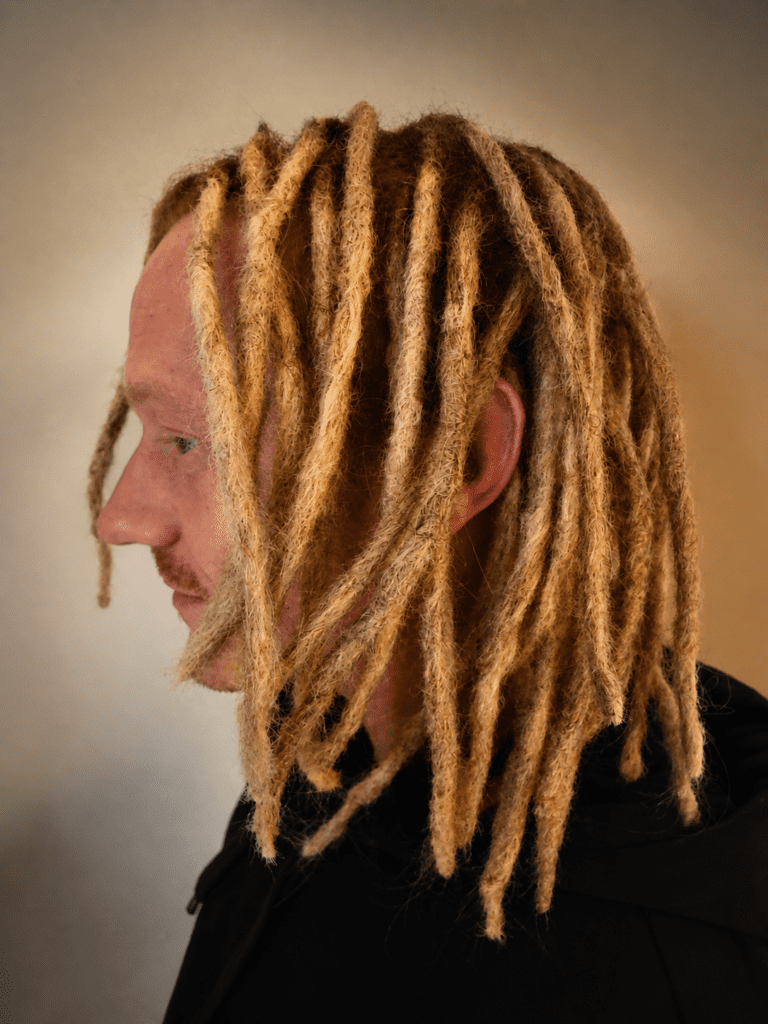
Bald Spot Dreadlock Options: What Is Safe & What Is Not?
Bald Spot Dreadlock Options: What Is Safe & What Is Not? If you have a bald spot and you are wondering whether dreadlocks are still possible, the honest answer is: sometimes, yes — but not by guessing. A bald spot does not automatically rule dreadlocks out. In some cases, there may be more options than…

Receding Hairline & Dreadlocks: What Can Still Be Done Safely?
Receding Hairline & Dreadlocks: What Can Still Be Done Safely? If your hairline is already receding and you still want dreadlocks, the fear underneath that question is usually very real. Most people are not just wondering whether the style will suit them. They are wondering whether one wrong decision could take an already fragile front…

Can You Get Dreadlocks if Your Hair Is Thinning and Won’t Grow Past a Certain Length?
Receding Hairline & Dreadlocks: What Can Still Be Done Safely? If your hairline is already receding and you still want dreadlocks, the fear underneath that question is usually very clear. It is not just, “Will this suit me?” It is, “If I get this wrong, could I lose even more of the front?” That fear…
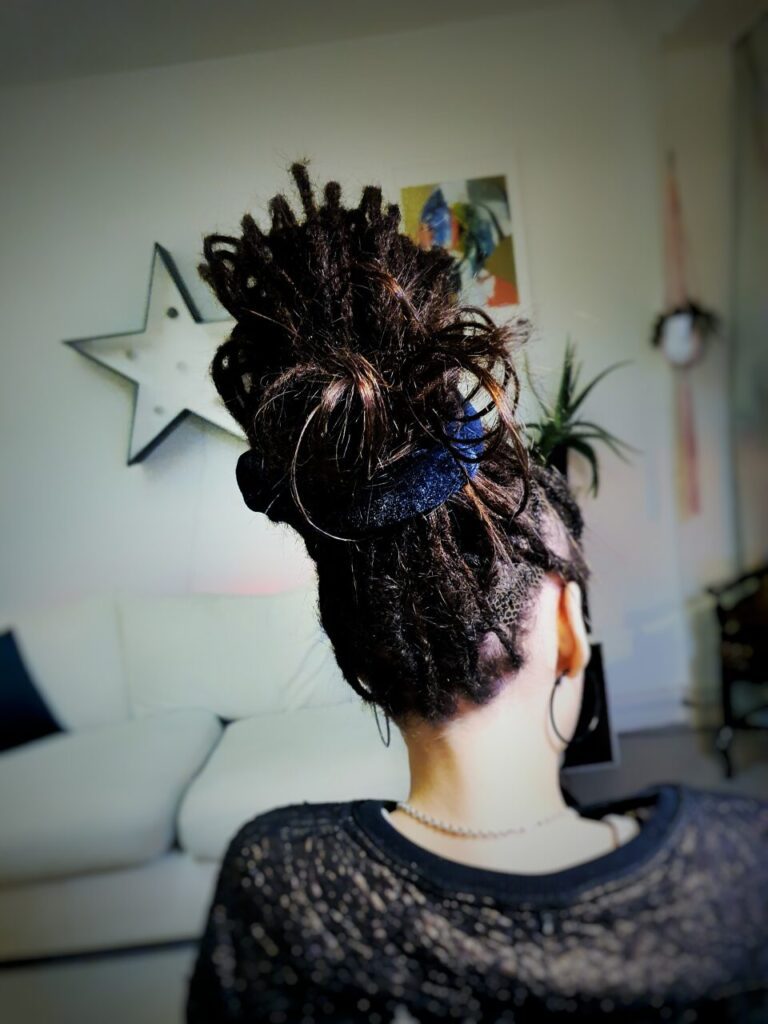
When Should You Not Get Dreadlocks? What to Assess First
When Should You Not Get Dreadlocks? What to Assess First Sometimes the problem is not dreadlocks themselves. The problem is trying to approach a complex hair situation with a standard dreadlock plan. If the hair is thinning, the scalp is sensitive, the roots are weak, or there are bald or fragile areas, the question is…
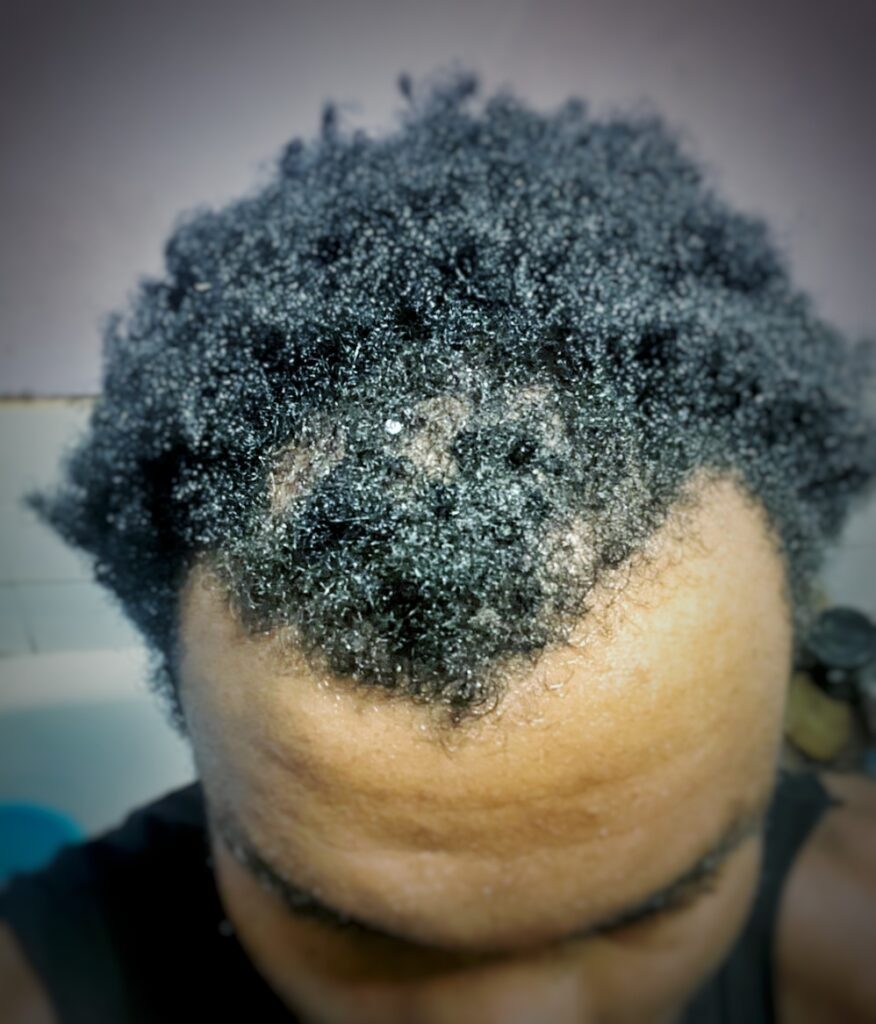
Can Dreadlocks Cause Thinning Hair? What Actually Causes the Damage
If your dreadlocks feel thinner at the root than they used to, this question is not theoretical. You are usually trying to work out whether dreadlocks themselves are the problem, whether the maintenance has become too harsh, or whether your hair has been carrying more stress than it can safely sustain. That distinction matters. Because…

Interlocking vs Intermatting: Why Method Matters for Thinning Hair
If you have fine, thinning, or already vulnerable hair, the method used at the root is not a small detail. It can be the difference between something that feels secure in the short term and something your hair can actually sustain over time. That is why the conversation around interlocking vs intermatting matters so much…

Dreadlock Repair After Damage: Can Thinning Hair Be Recovered?
When dreadlocks start going wrong, people usually know something feels off long before they know what to call it. The roots feel weaker. Certain sections start pulling. Some areas look thinner. Extensions stop feeling secure. The hairline changes. And what began as “maybe it just needs maintenance” turns into a quiet fear that something more…

Can You Get Dreadlock Extensions With 1 Inch of Hair? What Actually Decides
If you have been told your hair is too short for dreadlock extensions, you are not imagining how frustrating that feels. Especially if your hair is also fine, fragile, thinning, traction-affected, or already carrying the stress of previous work. At that point, this is no longer just a style question. You are trying to work…
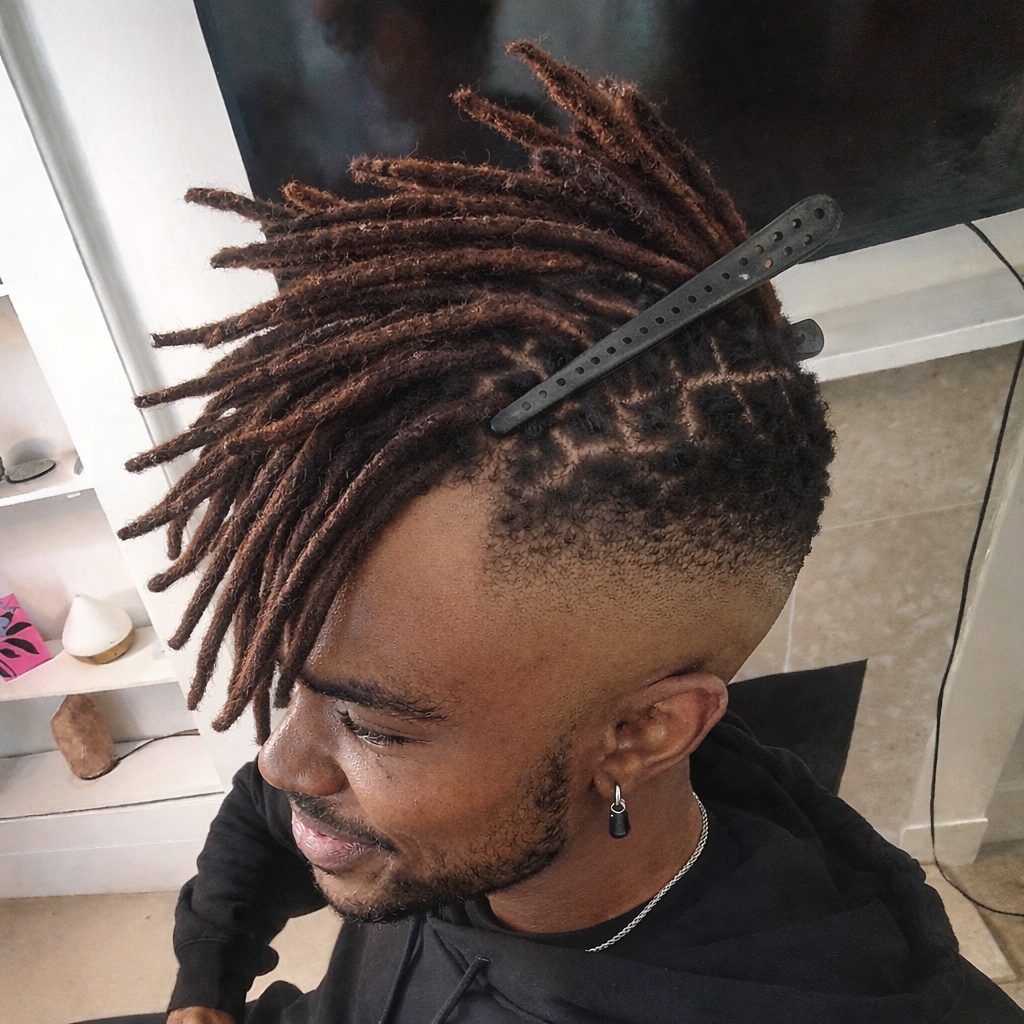
Do Dreadlocks Cause Traction Alopecia? What Actually Damages the Hairline
If your hairline already feels vulnerable, this question is not casual. You are not just asking whether dreadlocks look good. You are trying to work out whether they could cost you more density, more breakage, or more visible loss — or whether the real risk is simply having the wrong work done. That distinction matters.…